This isn't my device...
It's time to disregard privacy and to encourage a player's nosiness! Here are a few interesting games that encourage you to search someone else's device.

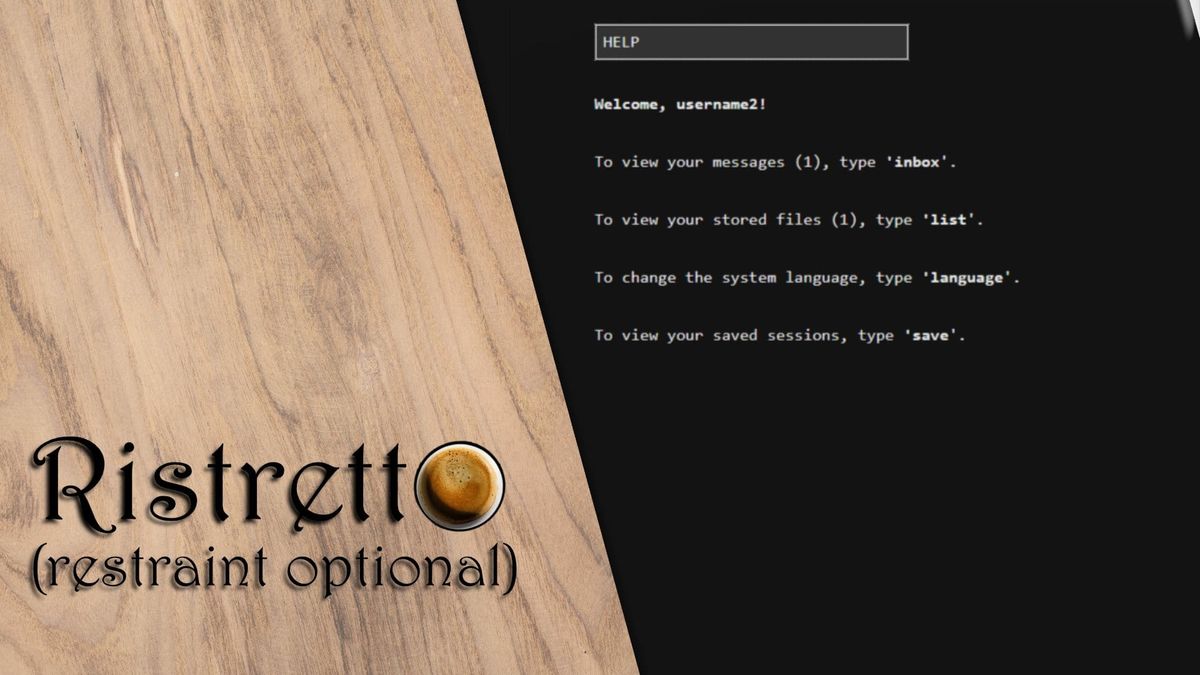
The Ristretto has always meant to help me showcase a few titles that deserved to have a spotlight shone on them. However, to me, they still felt like they were just a bit too close to standard reviews. And then I've come to realise that this format doesn't quite work for shorter experiences as a whole - which is why I've decided to shake things up slightly. Let me share with you what I've come across.
It all started when a good friend of mine shared a link that led to an indie game that I hadn't heard of before. There was a quick message attached to it as well: "This looks like something you'd enjoy."
Type Help (2025)
Created by William Rous, the game is described as a mystery puzzle game. That was the main reason my friend recommended it to me. She was right. The game was great fun and I do recommend checking it out on Itch.Io and to keep an eye out for its Steam remake under the name The Incident at Galley House.
While I could praise the story for quite a bit, what I ended up focusing on was the way the game was presented. The premise was simple: The player is provided with someone else's laptop, and they have to investigate what was on the device to be able to solve the mystery.
This meant to read the few files that were already at hand, and with their help figure out the respective names of the rest.
This wasn't the first game that utilises this more immersive approach that has the player function as the main character of the story. Home Safety Hotline (2023), came to mind, though there the computer being used was simply the player's workstation.
Now, however, I am tasked to work and pry through someone else's belongings - be it with permission or not. Here it had functioned as part of the puzzle box that needed to be solved, but my fascination with the concept stuck; Which must have been part of the reason I've actually came across a post that mentioned...
Vile: Exhumed (2025)
Now, the post itself was less about the game's content, but the fact that it had been banned from Steam before it was ever released. The developer (Cara Cadaver) with the help from the publisher (DreadXP) decided that she still wished to share her game with the public, and thus made it available as shareware. On their site - aptly titled vile-is-banned - they also published a statement in regard to this wrongful ban.
I had already considered playing through the game out of curiosity - but it was the game's description that was had cemented my choice:
VILE: Exhumed is a game about searching through an old computer, uncovering dark secrets, and experiencing the horrors of parasocial obsession and misogyny. [...] No one is allowed to dictate what kind of horror is acceptable, or what stories are allowed to be told. [...]
- Cara Cadaver
The title of the game is more than fitting. Unlike with the previous game this didn't feel like an investigation or solving a larger mystery. Instead, it felt like my curiosity only led to despicable revelations. As a player I wondered, why I was going through this in the first place. Type Help mentioned it was my job - had given me "permission" to do so; But here? Now? It felt like I was simply too curious for my own good, and what I've learned was horrid. Who could have guessed that a terrible human being would terrible things on their computer?
All of this to say, I do agree with the creator - this piece of horror media did not deserve to be banned - and while I can't recommend this game as easily as others; For those that don't mind horror, it is worth giving it a try. What I do recommend to everyone is to read Cara Cadaver's statement about the ban and the implications of Steam's decision.
For me, the experience that had been Vile:Exhumed did not stop my interest in games that used this sort of premise. Instead I found myself wondering - what are the types of stories being told in such a format? That was the point when I recalled...
A Normal Lost Phone (2017)
Another puzzle game, this one developed by Dear Villagers on Itch.Io; It had been in my games' library for quite a while - untouched.
It felt like the natural evolution to try a game this at this point, because to me - I felt like I'd cracked the code. These games might be puzzle games, but at their core they were stories.
Each of these games only provide a tiny glimpse into a world that seems so much larger. You read and you learn about the people through messages or conversations, and as I kept playing I realised why this worked me so well: It was basically what found footage did for film. It offers the player a window, but it also suggests a closeness and immersive experience. The player IS a character of the story.
In none of these cases is the player taking control of someone else - this is "just" them. It's my decision to pry, my decision to continue going and to see if I can reconstruct what happened. None of the 'protagonists' in these games have a name. It's "You".
When the credits started to roll, I still thought about these games - about the different topics that they've covered - the labels that are used to describe the experiences themselves. Probably, because I was still thinking about Vile:Exhumed...
A quick look through my library led me to my next game.
Another Itch.Io title and created by Rosalie Vile; This time the game asks you to "explore the depths of an unknown computer, finding clues and surprises along the way" (OS).
Happy to be back on a computer, I guess; Though unlike all the others - this game does not feel grounded in reality. It very deliberately separates itself from reality with its more neon and bright colours. Thus, while the presentation still suggests the same intimacy and immersion - it also doesn't take itself as seriously.
Not to say that this game doesn't cover heavy themes. However, unlike while that was pure horror, this game is trying to strike a balance between its darker themes and more satirical elements. In a way this was an interesting palette cleanser for me. Additionally, it was an interesting showcase that this form of storytelling can work in more than one way.
My interest in the topic hasn't waned yet, which was why I returned to Accidental Queens, and played through their spiritual sequel.
Another Lost Phone: Laura's Story (2017)
By this point I knew what to expect. Once again the story included heavier themes, once again they felt more grounded and led me to think about Vile:Exhumed again.
Previously, I kept talking about the stories that were being told; The window that we're looking through. However, we're looking through this window with a very specific lens: the lens of the previous owner.
Thus, the question for these games isn't just: "What is the story being told?" but also "Who is telling the story?"
Originally, when I started playing Type Help, I'd assumed I'd focus on the puzzle aspects, only to find myself derailed and going through a completely different sort of treasure hunt.
All of the games that I've mentioned deserve to have a spotlight on them, they manage to do a lot of story telling even with their shorter runtime. It was the reason I refused to elaborate much on those stories - they're far more interesting when experienced first hand.