...I'm still thinking about Starkid and their Hatchetfield-Universe.
It's not quite over. Mischief had a lot of time to think about their recent revisit into the Hatchetverse. This led to a quick look at horror fiction, musicals, and the concept of being considered camp.

In psychology an interesting phenomenon was discovered by Bluma Zaigarnik in 1927; In its essence it could be described as the brain’s tendency to remember incomplete or unfinished activities ("Zeigarnik Effect").
Originally, I'd assumed that I'd be writing about this phenomenon while covering a subject such as achievement hunting in video games; How the percentage tracker and achievement trackers all further this notion of having left a game unfinished, and how this could be used by companies to keep their player retention high.
Instead, I find myself writing this article here. One more article about my recent revisit into the world of Starkid Productions. What had started as a means to catch-up with past projects leading to multiple deep-dives and revisits and while certainly enjoyable; I also felt like I'd not quite covered all the aspects that I'd wanted. It felt - incomplete.
As I'd tackled these past recommendations, I've mostly done so under the assumption that the people reading these rankings and quick thoughts had a certain familiarity with the subject. The exception being my past Ristretto on Cinderella's Castle, which I'd left rather vague on purpose
As I'd compared those few articles, I've come to realise that I never quite stated why I'd been so interested in the Hatchetfield series. Well, I mentioned my fascination with horror, but I never quite elaborated; Nor did I ever elaborate on Starkid Productions as a whole.
Thus, this article quickly turned into an attempt at answering one simple question: "Why do Starkid Productions work for me?"
To be completely honest from the start: On paper, these shows shouldn't work for me.
Well, no. Not quite.
How about: Back in 2010, during the time I'd actually came into contact with Starkid Productions, I'd not have believed you if you told me that I'd like their shows.
The reason why, was rather obvious to me. I never quite liked comedies. It was something I struggled with quite a lot - in any form of media. Not to say that I didn't appreciate a decent joke, but I always mistrusted any sort of material that claimed to be a comedy. Humour, after all, was subjective. If you claimed to be a comedy, but your jokes don't land... then there's nothing left to enjoy.
My personal dislike for comedies probably came from the fact that most comedies I had seen back then were romcoms (Romantic Comedies). I'm really not the target audience for these sort of movies, and it did impact the way I'd look at comedies for years to come.
Naturally, not everything that includes comedic elements would advertise itself as such, which was why I never really conflated horror movies with comedies, even as those two genres would occasionally overlap.
A rather famous example covers one of my favourite horror film series - Nightmare on Elm Street - which includes the popular and famous figure of Freddy Krueger; A character that has become famous for his snarky, corny (,and sometimes deliberately sexually charged) one-liners as he kills his victims.
On my end, there was a certain level of hypocrisy at hand when engaging with these movies. Here I'd been judging comedies, while praising those funny horror movies; And yet I never noticed. Mostly because people rarely claimed that those movies were comedies. No. They were horror films; A specific sort of horror film even... They were considered camp.
Now, what did it even mean to be considered camp? Looking back, I recall many conversations where 'being camp' had been considered a negative. Just like I'd doubted comedy, people certainly seemed to have their issues with camp; Three personal stories that have stuck with me are as follows:
- When I cited my interest in "The Rocky Horror Picture Show" back in 2008, I'd been rebuffed with a statement claiming that the whole thing was "sort of corny and campy" and that the story didn't make any sense either.
- When I mentioned my enjoyment of the Nightmare on Elm Street series just around the time when the reboot (2010) had come out I'd been told that there are better movies out there and that they "weren't even that scary since it's mostly camp anyway"; And therefore failed whatever sort of judgement existed for horror movies that I'd not been aware of.
- When I tried to find someone to join my watch of The Royal Ballet's adaptation of Frankenstein in 2016 I'd found myself quickly dismissed. Apparently "everything revolving around dance would remove the seriousness of the story at hand. It'd just be campy."
...None of these individuals even tried to explain what exactly they even considered camp to be, just that its presence was to be considered a negative.
When looking into the origins of the term itself, I've quickly come across multiple statements that cite culture critic and author Susan Sontag's work "Notes on Camp", published in 1964, as what had popularised the term worldwide. Certain aspects of camp were being highlighted:
- Camp was an aesthetic form that seemingly relied on exaggeration and being considered extraordinary; something that could be considered “too much” to be considered normal. (1,8,9, 26, 28, 38)
- There is a notion that camp cannot equal “good”; The being camp automatically cannot be considered as serious art (6, 27, 35).
- Camp has a certain level of artificiality constantly present; Not only that, but a certain theatricality and can function as the “antithesis of seriousness”. (10, 12, 41, 43)
- Camp still relies on a certain level of innocence and sincerity. (19, 20, 21, 22, 23)
- What is and is not considered camp relies on culture, and is therefore able to change as styles change. What had once been “normal” could now be considered “too much”. (30, 31)
- There is a certain overlap between Queer Culture and camp respectively. (51, 53)
There are certainly quite a few negative connotations present, and while not completely discarded, this notion that camp cannot be taken seriously frustrated me personally. In a way, it does reflect what my anecdotes had suggested. Now, with an additional layer that did incite my curiosity: the potential overlap between camp and queer culture.
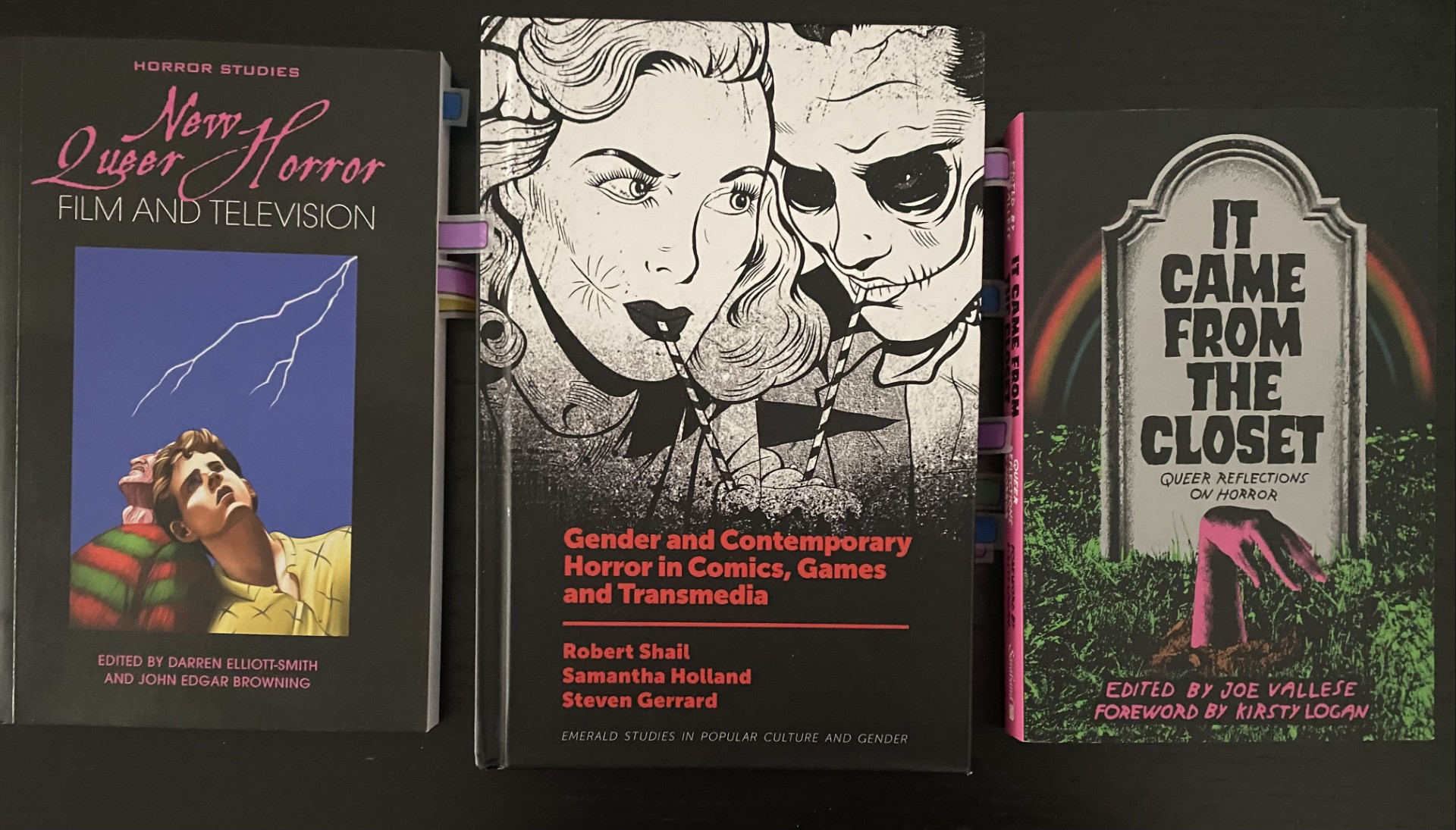
Needless to say, I wasn't quite satisfied with a definition that was over sixty years old; And somewhat diminutive still.
Now, more contemporary sources do still provide similar results, with camp being defined as a “style and aesthetic sentiment that values the extravagant, the ironic, and the flamboyant and typically bridges the gap between high and popular culture” ("Camp"). This definition similarly highlighting the notion of theatricality and flamboyancy, as well as implying that camp cannot reflect high culture, even if it is popular.
This article further notes that marginalised communities have been using this form of style, though doesn't quite elaborate much on where this connection stemmed from.
...Apparently, it's because the roots of camp had been an essential part of queer culture - specifically black queer culture.
“Camp’s roots in black communities – particularly among black drag queens – is often forgotten in light of Susan Sontag’s widely cited 1964 essay […] which kickstarted the white perpetuation of the concept; Sontag’s essay also depoliticizes camp, which is often quite political, especially within queer communities of color. […] [I]t is important to mention the way communities of color – particularly queer ones – have shaped the foundation of camp” (Virtue 182).
Just this addendum that I'd found while researching a term had left me speechless. There are many things one could say about the fact that many parts of camp had been decoupled from its roots. That the influence of these marginalised groups had been removed without much thought; And yet that still "being camp" could never quite be considered equal to "good". Instead, sites like Britannica compare "being camp" to phrases such as "so bad it's good" ("Camp").
What does it say that Sontag highlighted that camp cannot be taken seriously and that camp cannot be political, when it becomes evident that there had been statements made; Or that it cannot be considered "good" without any further elaboration?
Camp is far more complicated than I'd initially thought it'd be. Though, my personal opinion hasn't changed. I think, camp is pretty neat actually.
Culturally, this isn't anything too unexpected. The two examples that I'd brought up The Rocky Horror Picture Show, and Nightmare on Elm Street are considered cult classics!
My friend and myself also had a great time watching the Royal Ballet's rendition of Frankenstein. I'd liked it enough to even indulge in purchasing a blue-ray copy not too long afterwards.
Generally, I moved onto different friend-groups and circles as time went on and managed to find a nice community that appreciated camp - and acknowledges its academic worth - just as much as I did.
Those years also helped me grapple with my personal gripes against comedies, but that was a different story altogether...
Starkid Productions, from my subjective point of view, are actually really camp - and I mean that in the best way possible.
That's how they were advertised to me. That's why I'd decided to watch them back in the day, and why I'd stayed.
Maybe this wasn't such a hard leap to make. I'd already mentioned that The Rocky Horror Picture Show had been considered camp and that had been a musical too...
Musicals had been called camp, in a negative sense, before; Theatricality, artificiality, and exaggeration... Musical theatre seems to fit that bill quite well.
[M]usicals are still too closely associated with the compositions and tastes of an older generation, and as such tend to be stuck in the middle on many accounts: musically, socially, and in terms of scholarship, they lie somewhere between classical music and pop. Their stories, musical and vocal styles, and aesthetics are frequently dismissed as not realistic enough for movies or even nonmusical theatre, but nor artful enough for opera. The Broadway style of singing is too highbrow to rest comfortably in the realm of pop music, and often too lowbrow to be embraced by many opera buffs. Even rock- and pop-influenced musicals are far enough removed from their original aesthetic to be perceived as authentic or “real”’.
These assumptions […] can result in two simultaneously contradictory opinions: uninitiated audiences assume that musicals are campy, excessive, or too lighthearted or inane to deal with important issues. Yet some theatergoers prefer their musicals to be light and frivolous, feeling that weighty or intense topics are not really “musical material.” (Camus in Sternfeld & Wollman, Chapter 36)
However, my claim that any show from Starkid Productions should be considered camp - in a positive way - relies on one simple truth: there's sincerity in their work. Even if their tone is comedic, and if the concept is exaggerated and unrealistic, their actual shows always offer an interesting deconstruction of their source. It is clear that, be it parody or original work, they engage thoroughly with the material and deconstruct it in search for its core; Only then will it be reshaped and rebuilt to fit their performative mould.
In the specific case of the Hatchetverse this is showcased through their understanding of horror tropes and subcategories of horror narratives more generally, before stripped down and reinvented through a theatrical lens.
The core aspects of the horror remains unchanged. The underlying message ever present and nonetheless terrifying.
It's funny how Paul Matthews, the guy who didn't like musicals, managed to aptly explain this very concept within his own musical. Shortly after he’d come to the realisation that there was an ongoing infection that lead to people singing and dancing to music that was inaudible to the uninfected ears – he said:
PAUL: Emma, I feel like there’s something sinister infecting Hatchetfield. I know this is gonna sound crazy... and not very scary. But it is scary if you think about the implications. Promise me you’ll think about the implications!
EMMA: (confused) Okay, I promise.
PAUL: Emma, I think the world is becoming... a musical.
EMMA: Uh...
PAUL: Don’t say anything! Let it sink in.
EMMA: Okay.
PAUL: Okay. Now... Are you frightened?
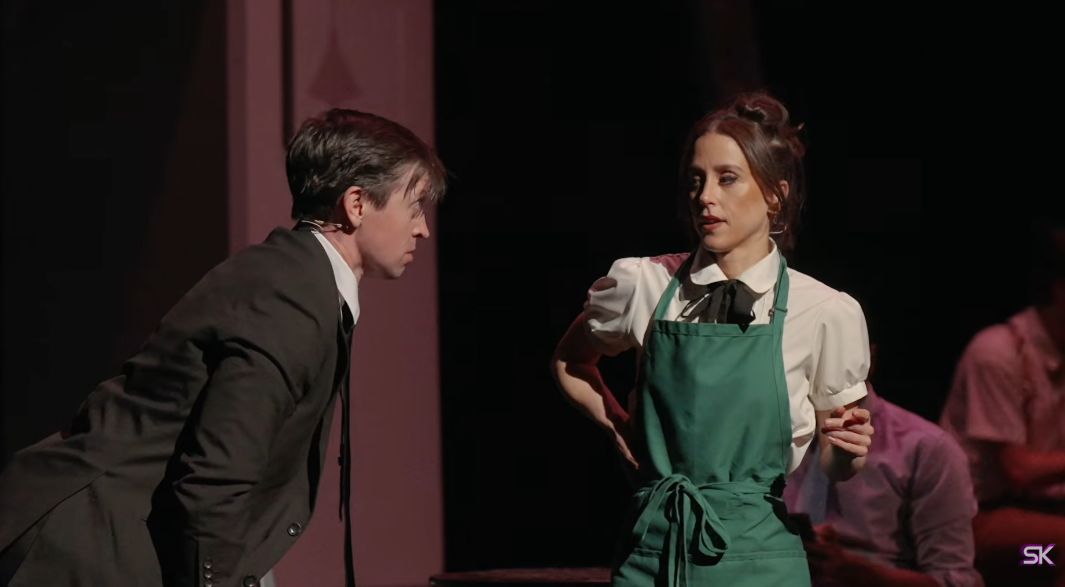
It doesn’t sound that terrible at first, does it? At least not immediately. If you disregard the funny notion that the guy that absolutely dislikes musicals is now in a world where everyone sings, and you instead think about the fact that an infectious spore has slowly overtaken the town and parades the bodies of its victims around with no care in the world – all subsumed to some higher hive that feels enough anger at one’s refusal to “join” it that it resorts to violence and humiliation of the survivors… It’s suddenly not that funny any more.
The reason this combination of horror and humour - or horror and camp - works so well is because they manage to balance each other out. The theatricality and artificiality of camp allow for a certain distance from horrifying concepts. They're packaged and showcased in a more palatable form. Yes, they're zombies, but they're singing!
Sweeney Todd: The Demon Barber of Fleet Street by Stephen Sondheim? Well, yes there's cannibalism, but their song is filled with fun little puns and wordplay. Isn't that nice? What about Audrey II from Little Shop of Horrors?
The horror behind the concept never left. It's simply presented in an unexpected way.
Black Friday was the follow-up Musical in the Hatchetverse. The big bad? It's capitalism; Or an eldritch being that decides to use humanities greed to its advantage...
Then there's Nerdy Prudes Must Die , which - to me - could be considered a ghost slasher that is reminiscent of The Nightmare on Elm Street in its execution. Naturally, I liked it.
Then there is also Nightmare Time. Unburdened by the stage, these stories are able to go through complexities without having to worry about blocking or staging. Nevertheless, these stories still take on familiar concepts for anyone that has had a passing interest in horror, and ties those into this world of exaggeration and theatricality.
The balance between the horror aspects and their comedy might shift per episode - and not every joke will land - but the stories that are being told remain a sincere exploration of their respective topic.
Truly, they're the perfect example as to why I find myself so fascinated with Starkid's work. Reading an episode blurb will always cause me to question how this could and should work, and then it does it anyways.
It might be over the top. It might be silly (positively camp for sure!), but it's always an honest exploration of contemporary horror in some really neat packaging and great music.
Sources:
Camus, Renée. "Joss Whedon and the Geek Musical" The Routledge Companion to the Contemporary Musical. edited by Jessica Sternfeld and Elizabeth L. Wollman. Routledge, 2020, Chapter 36.
"Camp". Britannica, Accessed July 16th, www.britannica.com/topic/camp-style
Sontag, Susan. 'Notes on "Camp"'. Partisan Review. 1964.
Virtue, Xen. "'Just Some Guy' Musicals as an Expression of Queer Desire in Dead End: Paranormal Park" Black Witches and Queer Ghosts: Race, Gender, And Sexual Orientation in Teen Supernatural Series. edited by Camille S. Alexander. Lexington Books, 2024, pp. 179-98.
"Zeigarnik Effect". Psychology Today, Accessed July 15th, www.psychologytoday.com/us/basics/zeigarnik-effect