Impressions on Persona 3*
Mischief and Sherigan talk about their experiences with Persona 3. This interview-style questionnaire was written by both of us, after Mischief proposed the idea so we could share our thoughts on the game.


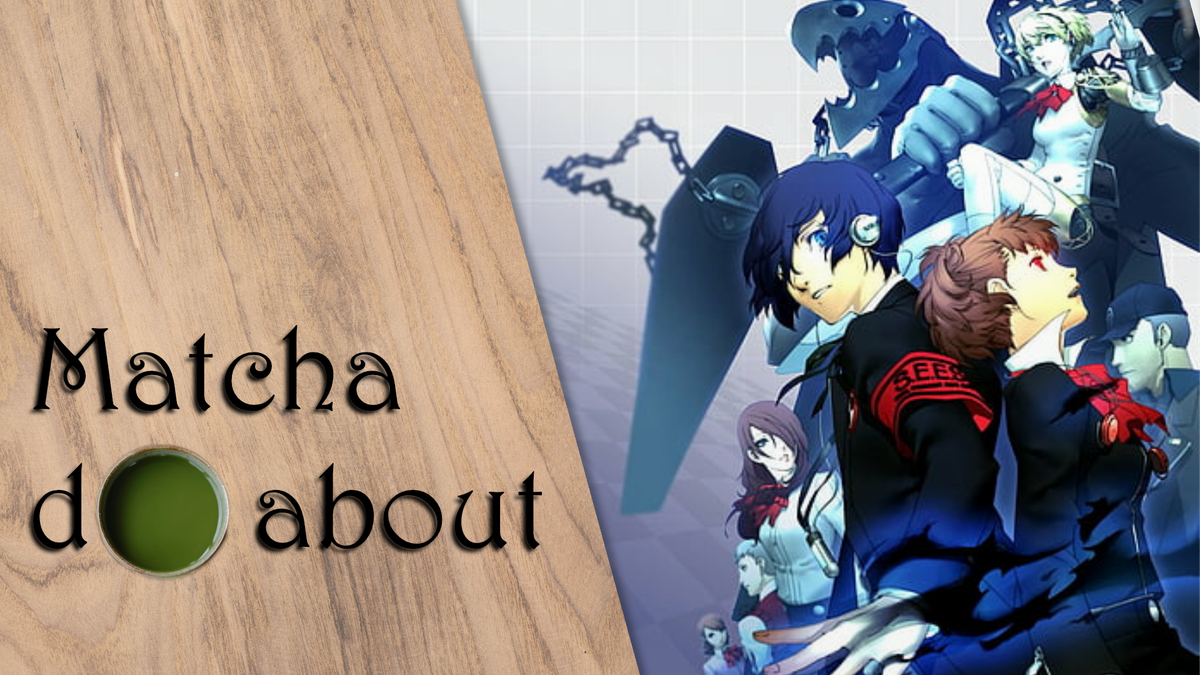
2026 marks the Persona-series’ 30th anniversary, and what other way to still celebrate a series than to compare a few notes on a title that both literary baristas had missed out originally?
Persona 3 had its Japanese release in 2006, with an extended edition Persona 3 FES being released worldwide for PlayStation 2 in 2008. A PSP version version making its Europe debut in 2011, as well as a complete remake released on multiple platforms in 2024.
While Sherigan decided to give Persona 3: Reload (2024) a try, Mischief instead opted to play the PSP release (though, in modded form); The reasoning behind that specific choice being covered in their article regarding the reveal of Persona 6 back in June.
Both of us were already familiar with the series itself, though, we'd both started our respective journeys with Persona 5 (2016).
We saw the fact that we both just recently finished our playthrough of Persona 3* as a perfect chance to exchange a few thoughts in a simple question-answer format.
Since we both have played P5 before: How'd you compare the social link setup?
Sherigan: I think I prefer Persona 3 Reload’s style of social links. They feel like they cover a broader range of topics and emotions than the more thief- and goal-oriented social links in 5. Furthermore, I felt a broader range of emotions towards P3’s social links. In P5, I kind of just liked all of them, but in P3, there were some people I genuinely disliked, such as Suemitsu or Kenji.
Mischief: Both have their positives and negatives, but I liked that P3P seemed free-er. It made it feel like Kotone actually had a life outside of her business with S.E.E.S. while Joker, very clearly, is mostly a phantom thief. It gives Joker’s choice some more meaning, as his hangouts have a more specific goal, but it really seems to remove some of the charm of being “just” a student. I can’t decide which one I prefer, it’d depend on what I want to play as; It makes Joker seem more strategic than Kotone, but makes her feel more like a person than Joker?
Then again, both are spreading themselves thin to appease the social link system. It’s kind of hard to recall the P4G social links and in which category they’d fallen, now that I think about it – but I think it would probably have been a bit more of a middle ground. More social links within the Investigation team than Makoto had in P3, but not quite as solely plot focused like Joker with P5?
Regarding the time spent in Tartarus - How'd you tackle the Tartarus-Grind?
Sherigan: When I first tried to play P3R, I went way overboard: I tried re-grinding previously completed floors every time I entered Tartarus again. Of course, that was entirely overkill and I, predictably enough, burned out on it. The second time around I played through Tartarus more naturally, only grinding the most recent set of floors if I really had to – and it was barely necessary in the end. Once my party’s levels reached the early 80s, I decided to set my game to easy difficulty and kill the reaper to power-level my party. In the end, this made me overpowered for endgame, but I still very much enjoyed the entire journey. I never found the second time around Tartarus tedious, which surprised me.
Mischief: ...if not for video essays I’d probably have given up. A palace a day turning into Tartarus grind one night only was a harsh call. Was I optimising the fun out of my game? Maybe. It’s a hard habit to quit. It felt incomplete leaving before having the place cleared and I had to keep all the characters on just about the same level! So I’d really have days where it was just Tartarus.
Regarding your team of Personas, if it's possible to recall: Did you keep Orpheus in your team, and what were your main Personas and S.E.E.S. members used throughout your playthrough?
Sherigan: I did not keep Orpheus, though I could see myself keeping him on a future run – I’m somewhat more likely to try it with Arsène in P5, though.
I don’t remember a specific persona setup I loved, but I do recall my favourite team composition: Makoto (the player character), Akihito and Yukari formed the core, while I switched out the fourth member depending on the enemies. If there were enemies weak to gunfire, I’d bring Aigis, if they were weak to shadow, I’d bring Koromaru, for instance – Koromaru was my default fourth pick for the team. He’s such a good boy, I might just have to get a dog.
Mischief: Yes, I kept Orpheus. I buffed them and used a few skill cards to make them more viable, but next to Loki, probably my top persona. So, while I can't recall the whole team, I'd say that my top three must have been Loki, Orpheus and Titania. (...I had Titania on me during the dark hour in October. She already had multiple healing spells and Samarecarm, I call plothole /j)
My main S.E.E.S. team probably was Akihiko, Aigis, and the final spot being filled by either Koromaru or Junpei.
For certain parts in Tartarus I'd lean on Mitsuru and Yukari more, but I usually had ice and wind already covered.
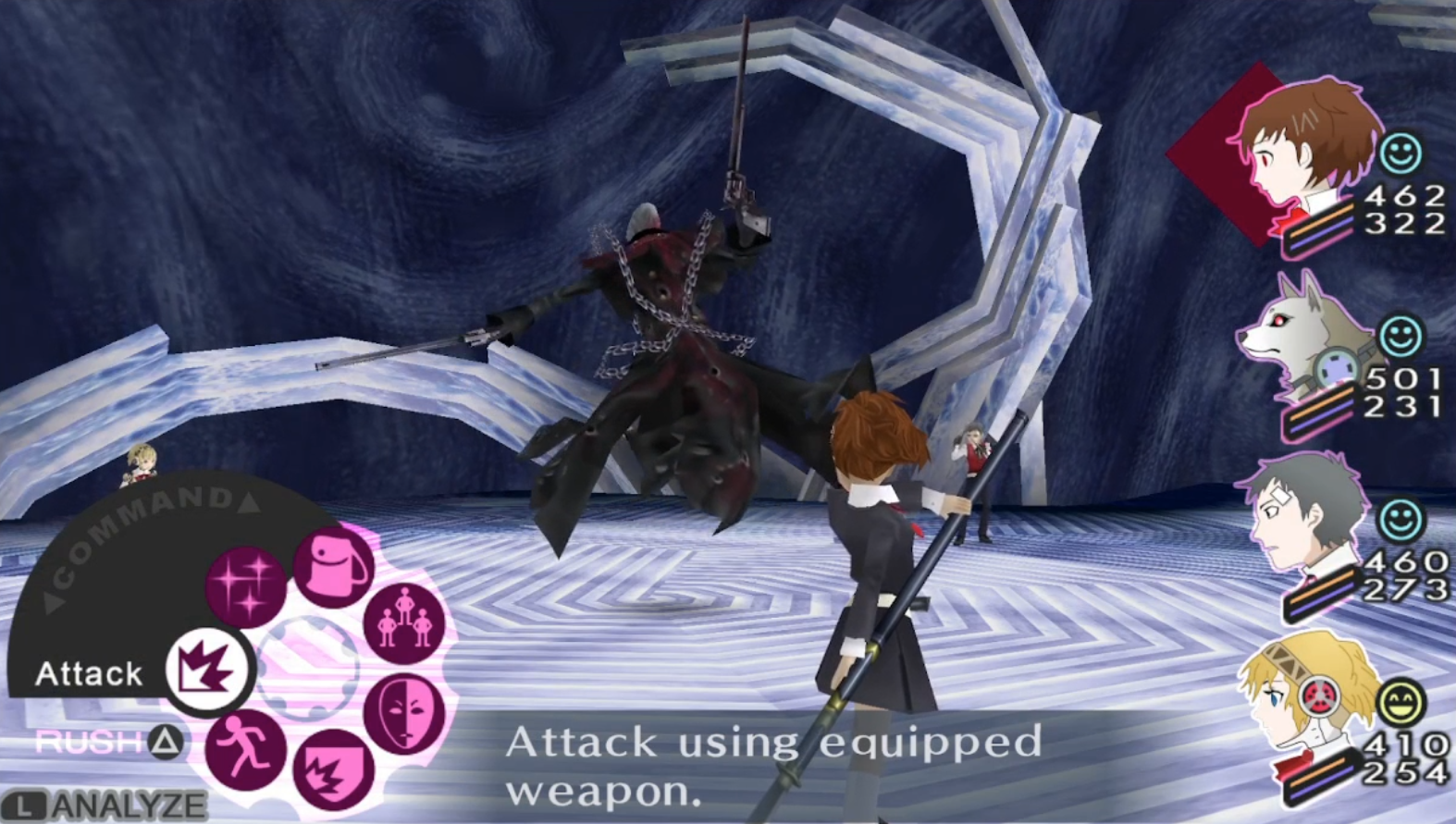
What were the major themes that you picked up on as the story unfolded?
Sherigan: The moon was obviously important from the get-go, and death a constant backdrop, with all the regular people turning into coffins during the dark hour, but I didn’t know what to make of it for the longest time. In a sense “death” is just the main failure state of any video game. Because of this, I didn’t quite understand its thematic importance, despite early signs, such as the gun-style evokers. Early references to Tartarus, the underworld in Greek mythology, I wavered between Hades being the ultimate force behind the dark hour, as well as Tsukiyomi, because of the obvious importance of the moon.
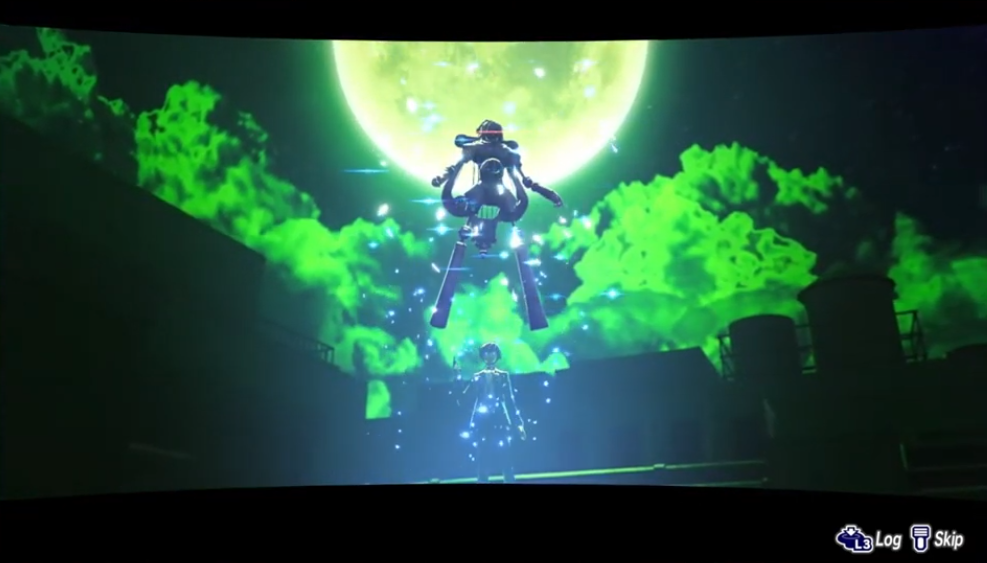
It took me quite a long time to who figure out who would ultimately be the final boss. There’s also a connection to the tower of Babel in there: an endless tower, reaching into the skies, explored for understanding. Only here, the understanding wasn’t about languages, but about the truth behind the dark hour. I quickly picked up on the shady corporation and research themes, and that they had some connection to the Tartarus and the dark hour. This is also what made Strega the most interesting faction to me – a dark mirror of S.E.E.S. in every way that matters. It’s terrible to think about what those children went through in the name of “science.”
Mischief: Death in all of its forms, and that handholding is probably the most intimate form of connection one could ever think of.
More generally, maybe the importance of connections in times of depression and isolation, when it's far too easy to fall into a mindset of apathy.
To follow up on the previous question; Do you think those themes were handled well?
Sherigan: Overall, I think so, yes. I don’t have any particularly strong feelings about the way they were handled.
Mischief: I’d say overall yes, though, with some moments that kind of fell flat; At least for me. I think the themes of depression and how not just the members of S.E.E.S. but everyone seems to struggle with either life, death, or some form of both has been interesting and led to many thoughts about “the meaning of life” and how to handle the pressure while one has to keep going. Especially, when contrasted with Strega, who seemed to be so desperate for that end to arrive – for those that stopped living to leave, but lived to wait for the end. It’s all a very interesting set-up.
Personally, I think they really didn’t handle Chidori’s stay at the hospital well at all. I quite disliked those moments, actually. While I understand that they wanted to contrast Chidori’s suicidal ideation, or her lack of fear of death, the way it was handled and talked about was in poor taste. Even Junpei’s attempts at helping her just made it worse, in my opinion. “What do you think I feel seeing you like this?” is one of the worst things you can say. Not only did Junpei know Chidori for barely a week by this point, but to put himself into a ‘victim’ position for having to witness this instead of offering any other actual support that isn’t just “Don’t do that!” is just bad. I can’t even say if it’s deliberately bad or not, it just wasn’t well handled. Nobody offers her any sort of support, they simply restrain her. Junpei isn’t offering support, but guilt trips her. This wasn’t healthy, and while I understand that parts of that lacklustre behaviour was probably due to her connections with Strega, it still didn’t really feel appropriate. They were in a hospital and apparently nobody knew how to provide any form of real support.
And talking about the ‘evil’ people themselves: we really didn’t get that much on Strega themselves. They’re kind of explained away at the very end, but I feel like considering what had been revealed, it would have been far more interesting to cover that during the time where Mitsuru was taking over her father’s work.
Similarly, Aigis whole arc and social rank kind of fell flat. I was very excited to finally have those hangouts, but her musings on life and what it means to be a machine that is alive were not covered as thoroughly as I’d hoped.
If you had the chance to change something (be it combat, social links, pacing, plot etc) what would it be an why?
Sherigan: If I could change anything, it would be some of the early pacing. Persona games (and JRPGs in general) often take their time establishing the setting first, but something about P3 made it feel too slow for my liking. There were lots of hints towards things, unsettling details to notice, but for the longest time, they didn’t really add up to anything.
Mischief: If we’re ignoring all those smaller plot-beats that I’d already mentioned: the overall pacing. While I enjoyed most plot beats to some degree, I do think the pacing was sometimes a bit scuffed – and we just were never given that explanation or time to even investigate Strega themselves, which is a missed opportunity.
Did you ever drop and restart P3? Why (not)?
Sherigan: I did drop and restart it, for the reasons outlined earlier. On the one hand, the early pacing was too slow to really hold me, and my approach to Tartarus made the game more tedious than it would have been otherwise. Overall, I’m very happy I picked it back up, though.
Mischief: While it took me a long time to actually start to play P3P (I must have gotten the game around 2021, before Reload was released) – I never really dropped the game after I’d started it. However, I also didn’t pigeonhole myself, if that makes sense? I still played the occasional simulator, or puzzle game when I felt like playing something other than the “main” game; But it was the only story focused game that I had on my roster for a while…
I think I knew that if I were to drop it that it’d be hard to pick up again? Moreover, I also enjoyed the discussions that I had with a friend, which meant that I had to actually continue the story! Naturally, the fact that I mostly enjoyed the story helped.
Who is your favourite teammate a) by story b) by combat use
Sherigan: My favourite teammate both by story and combat is Akihiko. I like a good senpai, and Akihiko fills the bill. He’s reliable and loyal, but has a bit of a rowdy past and had to stabilise first. His friendship with both Mitsuru and Shinji is a beautiful enduring backdrop to his character. In combat, I like his focus on physical moves, especially with his self-buffing capabilities. It also links beautifully to his rowdy past, his focus on training, and his athleticism, all of which are on display in combat: He likes using fist weapons to fight, his self-buffing represents training and discipline, and his athleticism comes through in his volleyball spike and other animations.
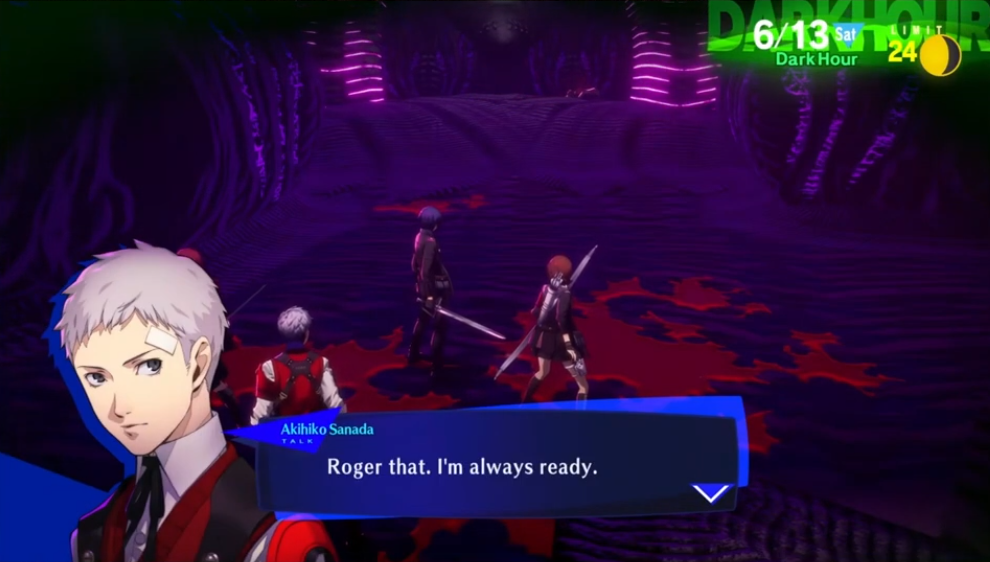
Mischief: ...I feel like anyone who’s ever heard me talk about characters that I enjoy can make a decent guess; Yes, I really liked Shinji.
Shinji who’s apparently alive in P3P? Good for him, really. It’s interesting how that seemed to be one slight deviation between the games. After the October event he was brought to the hospital and ‘fighting’ for his life. Due to the Kotone Cutscene Project, I was even able to see him in the ending cutscene too…. So like, that was interesting?
But also – and here I can’t say if it’s the same for Reload, though, for story purposes I assume so… when you fight Nyx and then create the seal… when you hear Shinjiro’s voice? That really got to me. Just. After hearing my whole team cheer me on to then also hear Shinji, the one that had been missing for months? My heart. Story-wise really, it has to be him. I had this whole little joke going with my friend about how both Kotone and Shinjiro were walking death flags. It was meant to be in good fun – and I kept claiming that them being friends would be the biggest gut punch since even if Shinji were to survive (I said that about him during the in-game August/September times) he’d then have to witness a friend die instead. I absolutely ate my words. It was perfect, really.
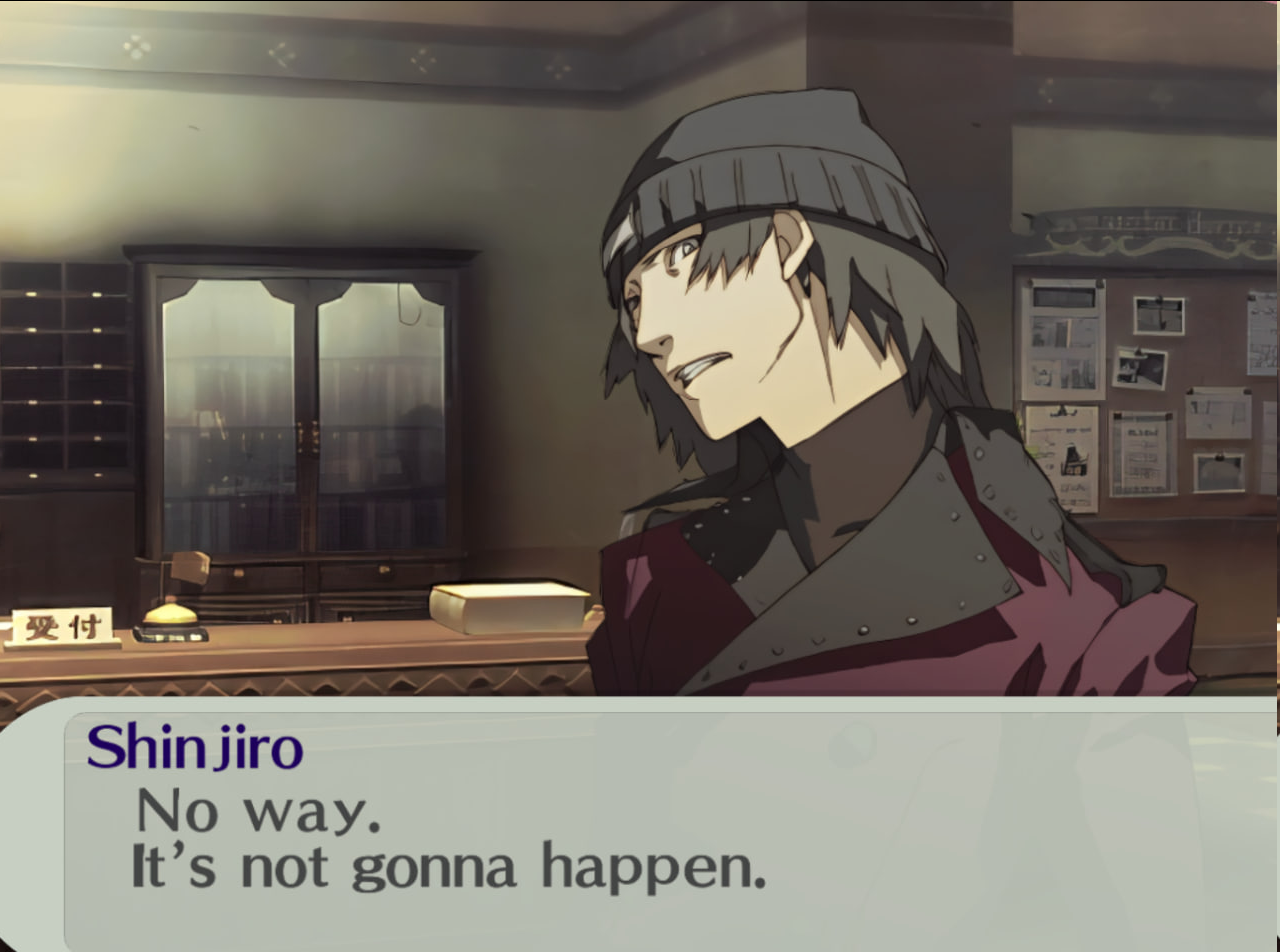
Combat-wise? That’s harder to answer. I really did like Shinji there too. He was my main physical attacker for a while. But I guess, Akihiko sort of became the big guy? Unintentionally, I have to say. He had a decent combo with Lightning, and the strike damage, as well as at least one team buff? So he was always useful in some form. I did keep him on the team for the Shinji & Aki team-up feeling for a while, and after that it felt weird to remove him since he had his plot reasons to keep fighting even harder… and then he ended up being one of my constant picks while I’ve tried to keep them all on the same level.
Having played both, what do you prefer about p5, and what do you prefer about p3?
Sherigan: I really like P5’s phantom thief theme, and the idea of these teenagers doing what they can to fight corruption. In some ways, P5 is more hopeful, idealistic, and, maybe even somewhat naive, while P3 is the more somber and brooding game. Gameplay-wise, Persona 3 Reload has mostly evened the playing field with P5 and its versions, so there’s very little distinction there. What I do prefer about P5 is its palace system – I like having these dungeons themed around their masters and their personalities, it adds some flavour and theming that Tartarus lacked for me. I do prefer the social links in P3, as outlined earlier.
Mischief: I feel like P5 leans into the friendship of the cast more. I always felt more connected, simply because the plot itself kind of demands their friendship? With S.E.E.S. it really felt like kind of a job with acquaintances first. It was still fun to befriend them, but having Junpei on Max rank, only for him to be sort of rude to me for being a “girl leader” because the S.E.E.S. rank was still low felt sort of weird to me.
P5 inverted that by making the basic assumption that those people hang out and ARE friends. They are simply better friends if the Joker were to hang out with them more, if that makes sense? While I don’t think P3 made a bad choice, it just felt like sometimes it made my ‘friends’ act weirdly while we were working as a team.
Now, generally, I think P3P handles tone a lot better than P5; At the cost of being somewhat vague. P5 includes many heavy themes, but then counters it with some over the top cartoon comedy that just doesn’t always land? Instead, it takes away from the actual issues presented. But the threats are always really real. Not just blackmail, but extortion, death, prostitution – all of those things are mentioned directly in P5 in ways that P3P only alludes to. Death might be a major theme, but it’s talked about in ways that might have you think, but often won’t be direct; And sometimes that took away from the punch? I did enjoy the more consistent tone of P3P, but I missed the specificity of P5.
Gameplay wise, I preferred the Palaces over Tartarus. There’s just more theming to the palaces that made them feel grander. However, I feel like that is an unfair comparison to make considering the hardware differences. Same about the inability to free-roam in P3P. It’s part of the limitations that exist to make the game work, but I did miss being able to explore Tokyo more freely.
Oh, I nearly forgot. I absolutely adored that people were busy. Yes, P5 has also days where a social link is busy – but going to Tartarus might not include the whole team because of exams! Because someone’s mourning, because – something! That was such a neat little addition to flesh out the world in a really simple way. People actually felt like people all the way through, while in P5 that seemed to depend on which character we were looking at.
Who is your favourite social link? Why?
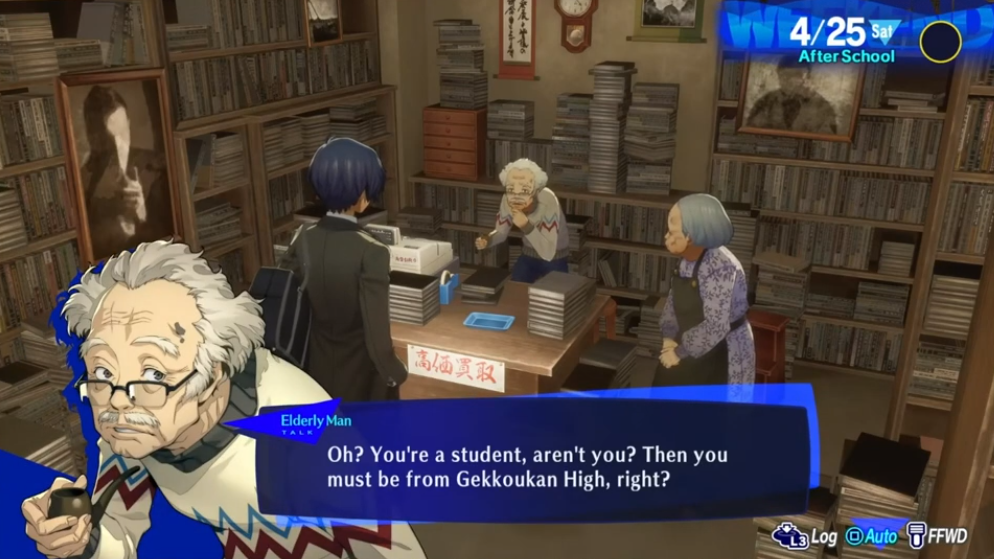
Sherigan: I have a soft spot for the elderly couple heading the book store – they are lovely, and spending some time with them made me emotional about parenthood. It was nice to have a slower social link with older characters in a teenage-centered game. The other social link I really enjoyed was Chihiro – Watching her grow more confident and overcoming her fears resonated with me as a fellow quiet and bookish person.
Mischief: That’s too hard a question to simply pick one. Theoretically, I really liked Shinji’s. It’s what led to that previously mentioned joke even – because the two of them kept hanging out and neither of them mentioned their obvious struggles, which cumulated in me accidentally romancing Shinji. After maxing his social link I had the ability to still hang-out with him! I’d not experienced that with any other Max rank yet! So naturally I was curious enough to follow through – only to have poor Kotone confess her feelings to Shinji! It really was a very doomed romance, and I do wonder if that was partially why they made it so that Shinjiro kind of survived his encounter in October? I really do wonder if his death would have been confirmed if not for that romance. Can’t kill the chosen (accidental) romance can you? (...in this essay, I’ll argue why Akechi Goro lives)
But other than that, I think Junpei actually had a decent social link. He really was adamant about trying to help Kotone find her place in school AND he wasn’t a forced romance link at all. He was so happy to be buddies with you, it was refreshing. Naturally, this also told me that he’d have a different arc with someone later – or else he probably would have been a romance – but it was good to know!
Now, though, I also think Kotone’s general links were really good? Saori Hasegawa was the Hermit link for her – and that story was actually rather sad; But something I’ve seen happen before. She’s an older student working at the library, who’d been shunned for her age and way of speaking – and later on framed not just by the students, but one of the teachers as well, as a floozy.
Saori had the Joker-Experience, with how the rumours in than school were spreading and exaggerated and putting her in a bad light. Sadly, quite a familiar story, but to have it in a game like this and to cover not only societal expectations, but also how hard it is to be believed was certainly something.
One link that I also liked – that was probably part of all versions of P3 was the Sun-Link: The dying man, who found some joy in writing. I think in his case the vagueness in some sense, followed by the directness of the fate that will come to him really did wonders to the way his story was told; And talking to him always let me to think and reconsider a bit.
Koromaru was just kind of sweet. Who doesn’t want to spend more time with a good boy?
Do you have a character you actively dislike? If so, what about them makes you dislike them?
Sherigan: The character I outright disliked the most was Suemitsu. He obviously has his issues, but I didn’t like his self-aggrandising, paired with the doomsday-cult thing he had going on in the second half of his social link. Even though he tried to “save” Makoto in his own way by inducting him into the cult, I find him highly unpleasant.
Mischief: Kenji – He was only a side-character in this story, but I really didn't like him. Rio, Kotone’s Chariot social link can do so much better than this guy. He was hardly around, but when he showed up, I found myself rather frustrated nonetheless.
Then there's Ken. I don’t think it’s his fault; But he was programmed to be a potential romance for Kotone, and that just made the whole social link a pain. It didn’t feel like we were progressing an actual arc, and his weird insistence on being “adult enough” for romance while Kotone was busy holding hands with Aigis, Shinjiro, and Akihiko (both Kotone and Shinji were allowed to bring a plus one) just didn’t help. We have to ensure that Ken doesn’t turn into Kenji.
The only reason Ken isn’t my most hated character, is because the rest of his arc was handled well and I feel like with a male protag all the issues would have been gone. His whole story and vengeance arc gave me so many Akechi vibes and then the boy ruined it by turning the social link not into an exploration of that but an exploration of him looking for that mature (romantic) connection. What a bummer.
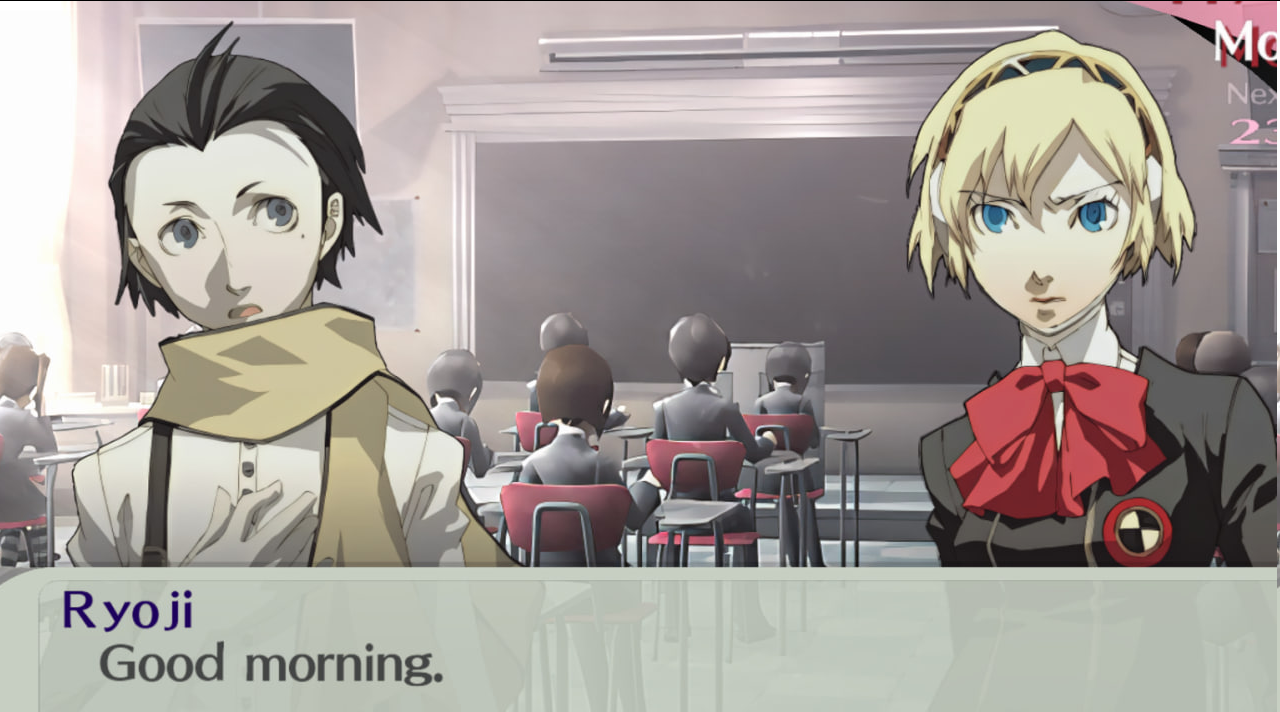
...Ryoji? Again, it’s not completely his fault. But this constant switch between him trying to be the biggest womaniser, versus the actual intrigue of his character just sat poorly with me. I raised my tiny death boy (Pharos) better than that!
What do you make of Junpei's arc, and how did it play out for you?
Sherigan: Junpei was one of these characters I really disliked early on – and I liked that I disliked him. My dislike didn’t come from him being written poorly, but rather from being written well, with a personality I disliked. Junpei was a boisterous rival, who always wanted to stand above Makoto, and seemed like a typical teenage boy trying to act cool. Couple that with the way he interacted with Yukari (who he kept calling Yuka-tan), and my dislike of him was so complete, I never brought him unless I needed to.
Then Junpei met Chidori. He developed genuine interest in her, and tried nurturing a proper bond on his own. This, and the dedication Chidori inspired in him, made me like him a lot more. Ultimately, Chidori died in my playthrough, and her power merged with Junpeis. I found the whole arc tragic, but also very interesting. It was great to see Junpei grow so much – his arc is definitely one of my favourites in the game. I just wish I could have saved Chidori.
Mischief: ...It’s complicated. Though, overall, I did like it. They set it up nicely enough, and if you talk to Junpei you can absolutely hear how his story was progressing in the back. That’s absolutely one of P3P’s strengths. Things are happening!
So I wasn’t too bothered about it – and knowing what I knew due to having Junpei NOT be a romanceable partner had me keep an eye out?
So things turned out well in a sense? Chidori managed to revive herself and return to the world of the living. Though, the convenient amnesia certainly was something that bothered me. They had established the concept early on, I just don't enjoy the trope that much. Especially that with Junpei also suffering a memory loss post-nyx would have implied that neither of them really hung out in those months post January. Which… considering Chidori’s own state might have actually been rather sad? Not to say that Junpei didn’t mention feeling like he was missing “something”, but it still felt like the game couldn’t quite commit to Chidori potentially being revived and having her around. The Shinji effect of not being dead but certainly removed from the story, you know?
So, I think theoretically I enjoyed its parts, and the execution and how it rewards the protagonist being attentive were a great plus? But I think its resolution is weakened due to the way the game has to handle its ending.
Generally, even though Sherigan and Mischief had different experiences with their respective protagonists and their respective versions of the game - one thing remained the same: We both had a good time with the game overall and enjoyed playing through it.
We'd also love to hear about other people's experience with their version of Persona 3; the good, the bad, and the memorable. Feel free to share your own thoughts, or throw us additional questions in the comments.