Tension and release: The ability to slow down.
A game's pacing is important and a commonality in its DNA. However, there are more ways than one to move from an action piece onto a calmer section within the same game. Recently, one specific variation of that has been on my mind: The ability to take your time, and remain stagnant.

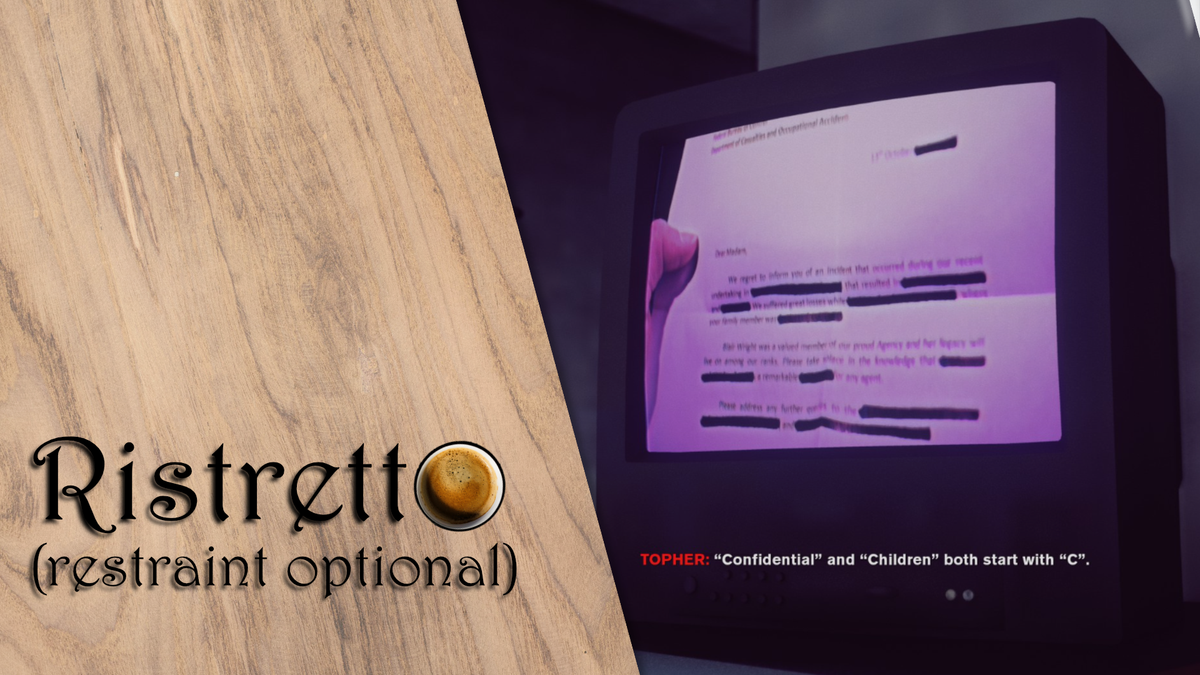
Multiple enemies have your character surrounded. The ensuing fight is intense, but quick. There's no reason to remain when a GPS marker keeps you informed of your goal. There is some traversal, and you can hear more enemies that are in pursuit. Not too far away there is an open door, leading toward what can only be perceived as sanctity - and the moment your character has entered the house, you feel yourself calm. It's done.
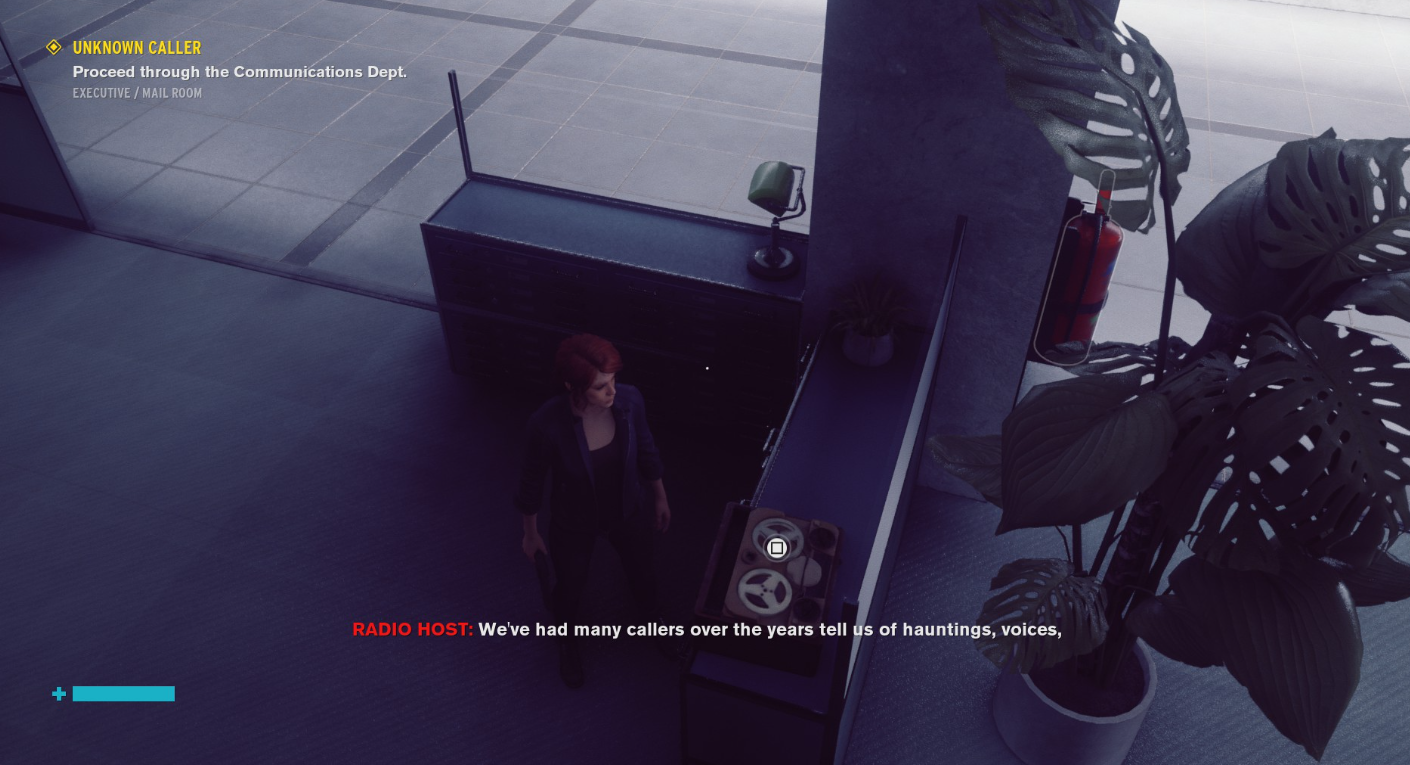
Then you look around and you see a radio. A button prompt appears to turn it on. Do you?
Recently, I've been thinking about not only the pacing of a game's overarching narrative, but - more specifically - how a game might provide the player with a chance to take their time with it.
This isn't to cover games that already perpetuate a slower paced gameplay style such as Animal Crossing, Tomodachi Life, or a Story of Seasons title. Instead, this phenomenon specifically applies for games that are marketed for the promise of a more intense experience.
Games that are known for their action elements, for their combat, or for their gripping narrative. However, all of these games don't simply survive on tension alone. As Mitchell states early on in her article analysing patterns of tension within video game missions:
Tension is the perceived risk-to-reward pressure a player feels in the moment, and a curve is its shape over time. Release is the deliberate easing of that pressure through breathers, control, or information that restores capacity to choose.[...] though genre and intensity vary.
- Lauren Mitchell, January 19th, 2026 in "Tension Curves and Release Patters in Missions" on PulseGeek.
Tension and release are two parts of a whole. However, there are many ways these moments can be included in a game; And while I'd argue that not all of them cover the phenomenon I'd been considering at the start - it's still worth to mention them here.
A change in gameplay loop:
This instance is probably the one that takes the least influence from a player, and is - thus - the least likely to cover what I had in mind. However, I cannot completely discard it, because even here the player will have some input.
If we argue that the 'tension' filled aspect of a game includes all the combat sections, then any alternative could be considered a breather (even if the narrative tension persists).
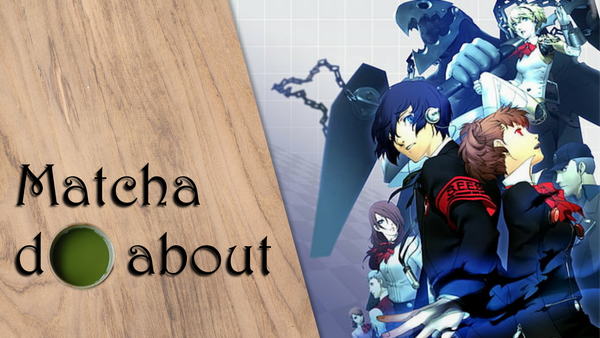
A few games that come to mind, following this concept are the modern Persona games, Supergiant's Hades series, Alan Wake (2010), Cult of the Lamb (2022).
All the above-mentioned games have at least two distinct, and clearly separated loops which can be summarised as the more combat focused loop and the upgrade, or exploration, loop.
In the Persona games the latter would be the social links and stat levelling as the in-game calendar moves on, while in games such as Hades or Cult of the Lamb those parts would include upgrading (and unlocking) parts of the main hub. Alan Wake, a (shorter) narrative experience separated those loops through the day and night cycle. The former focusing on plot and exploration, while the latter focused on survival and combat.
While they certainly adhere to the definition of tension and release, they're basically a part of the game's code. It is impossible to skip one loop completely. However, player agency still matters in some form - namely - because it is the player that often decides on the pace that the release will take.
- The player can talk, or listen, to NPCs - or otherwise explore their surroundings for further world-building.
- The player can (often, not always) decide on the speed that their character takes within those sections - are they running? walking? standing still even?
To me those instances in games are meant to force this release. The reason they persist in a game's DNA due to the importance of pacing in any sort of text. And since it's always possible for a player to (accidentally) optimise the fun out of any game - instances like this can ensure that this breather can take place.
To fast travel, or not to fast travel?:
If we're completely honest, both options are able to provide some form of release for the player.
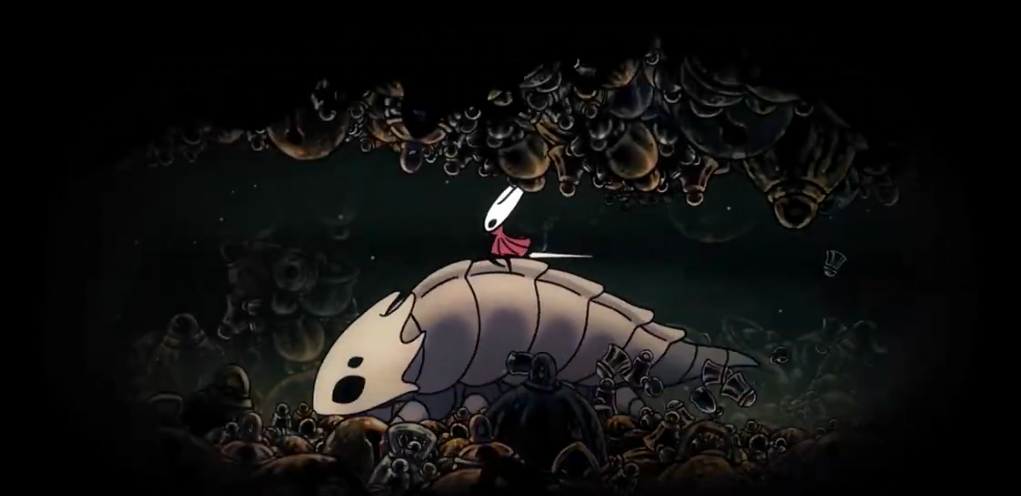
The easiest example would be Silksong (2025). Fast travel would probably be the only instance where there are guaranteed no fights to be had. Instead, the player gets to enjoy a moment of - not silence - but calm while Hornet is perched on top of the Bell Beast. The ringing of the bells accompanying the trip. It's short, and shorter than if the player had decided to take the scenic route - however - this was the less perilous way.
Similarly, in Marvel's Spider-Man (2018), one could decide to fast travel and be greeted with the image of the hero in the subway. No random crime alerts, no sudden calls - just a moment in the subway.
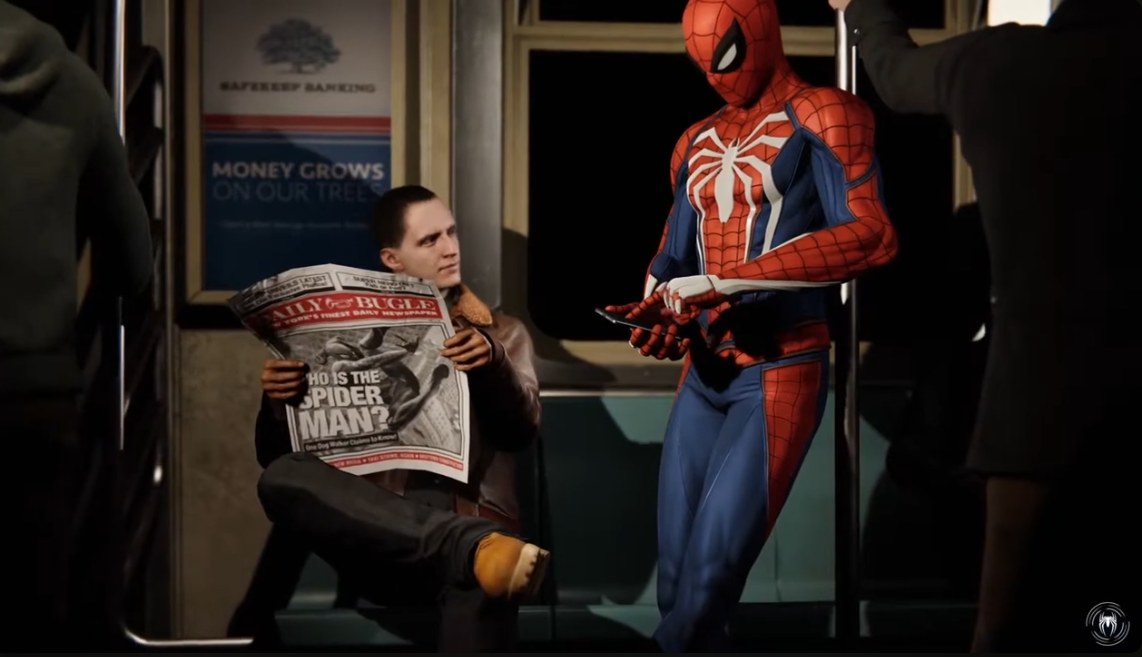
In these instances, I'd say fast travel allows the player just a smidgen of release. A short breather before their journey continues...
And yet there were other games, where I'd say fast travel does the opposite. That it rushes the player and makes it so that the time between the more action pact elements of the game is shortened; That it removes elements that could lead to a player slowing down.
In Silksong, it's to explore somewhere new - to try and map a previously uncharted place and be once again amazed by the world as a whole. Meanwhile, in Spider-Man it removes the instances of the player stopping and hearing the excited shouts of a passerby and to give them a high-five. This being one of the funnier, yet memorable, bits of fleshing out a world that had otherwise no impact on the game.
Regarding the Persona games specifically, I truly disliked the fast travel system. There was something so calming about the ability to traverse the world - and not to instantly teleport. The mundanity in P5R to wait for a train had been something I'd greatly enjoyed.
Luckily, the game never forces you to engage with that system, it is simply there to potentially counter the tedium that constant a constant back-and-forth could bring.
In the end, it is the player's decision to use the feature if they want to. However, fast travel - in that sense - is an option to pick up your pace. This choice is closer to what I'd alluded to at the beginning, but it's not quite there yet.
The ability to slow down:
Now, I'm far more intrigued when the separation between tension and release aren't as hard-coded. In those instances, it's the player that decides if lingering is worth it for them through a multitude of means:
- Once more, the NPCs: If there is nothing stopping you from moving and returning to the higher stakes and tension filled moments - is it worth to take a moment and talk, or listen, to what the NPCs have to say?
- Exploration: Even if the game has an optimal path, why follow that when there's so much more to see? Is it worth to potentially backtrack and see what there is to see?
- Stagnancy: A step further. Is it worth to just... stop and take a scene in? If there is nothing to it - or at best a button prompt to sit down and let 'a' moment happen - is it worth to stop and experience it?
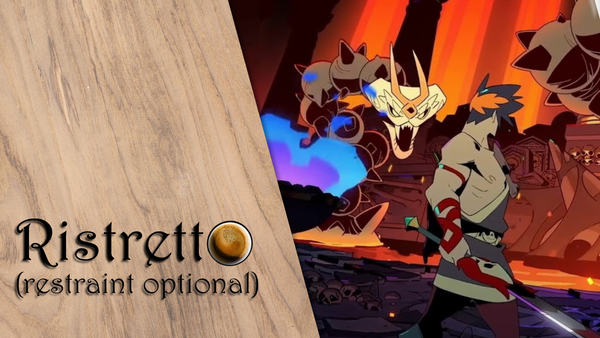
Stagnancy is what I'm most intrigued by. For me, in Hollow Knight and Silksong, these would be the moments on a bench. A moment of peace with either Quirrel or Sherma would be the easiest example. It wouldn't be the only one. For Hades, this would be my choice in Asphodel to visit Eurydice, and instead of immediately talking to her to receive an upgrade - instead simply stand by and listen to her song.
Moreover, I'm clearly not the only one. As I was looking into the topic, I'd come across a whole comment thread that was asking about those "Quiet moments of introspection and melancholy in games".

And wasn't it nice to see that profile picture be an image of Alan Wake. The figure that I probably have to blame most for this whole thought exercise.
Previously, I'd mentioned the separation of day and night gameplay loops that force the pacing to slow down in between those chapters of the game. However, they are not the only instances of release, considering the lengths of some of those night-sequences.
Instead, the game has its checkpoints. Small moments in the light, where ammunition might await Alan. Or maybe, maybe a TV or radio.
Now, both of these elements add to the world-building, or add to the understanding of the narrative in some form; But they're also a form of entertainment.
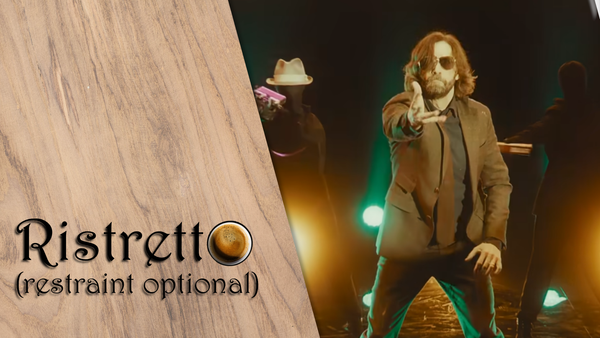
The show Night Springs, is only loosely connected in its themes. The radio itself might inform Alan of a few events that had taken place, but the song that plays after? If one wants one can simply stay stagnant and listen. Alan is currently in a space that could be considered safe.
Then there are the cabin sequences. A showcase of what the writer had gone through - an example of how he'd been spiralling (an example that will then be taken to the extreme in the DLCs) - which the player can absolutely ignore if they so want. There is nothing other than the players choice to remain and listen that keeps them from leaving.
It is fascinating.
Because while I've never really thought about those moments of release. I tend to take most games at a slower pace, thus, I'd rarely think about those moments of tension and release more specifically. However, it was when I was given this clearly labelled choice - to "turn on" a TV or radio, that I'd started to think about this more specifically, and what it meant for me to be able to make said choice.
How many people have never seen Night Springs? Or did not listen to any of the songs on the radio? I wonder sometimes, how many people liked or disliked this form of additional world-building.
In a world, where we praise that one can listen to audio-logs while exploring instead of being stuck on an in-game menu... how many people nowadays would find this unhelpful if not frustrating?
And yet, I find myself charmed by these moments. Maybe it's because it's not only "me" that is watching or listening, but it's my decision to have the character listen. The fact that the world does not dissolve around me, is what's so charming.
Therefore, if given the choice to slow down... I'll probably take it again.