The Gacha that Got Me
Honkai: Star Rail Is Celebrating its 3rd Anniversary! To mark the occasion, I look back on my two-year journey with the first gacha that managed to hold me - and hug me just warmly enough to shake a few coins loose.

Genshin Did Not Leave an Impact
Genshin Impact was conceptually interesting, and seemed to have quite an ambitious scope for a free-to-play game. I liked the idea of following these characters around and exploring a fantasy world, but there were three factors that eventually made me drop off.
The first of these was the equipment system: There were so many things to farm, and such limited resources to do it with, it felt like the game wanted to slow your progress down deliberately, so a player would be tempted to buy the currency that was limiting them. Much of this might have been my inexperience with the genre, as HSR uses a very similar system to Genshin, but at the time, that was my experience with it.
The second was the fact that Genshin Impact features real-time combat.
When the game was released, it was fairly new for an open-world action game to release on both mobile and PC. Even rarer was the ability of seamless cross-play and cross-saves. In theory, this meant you could play on PC or console when at home, and continue playing on your phone when you're on the go. This was a major selling point for me, but I quickly ran into a problem:
I really, really did not like playing Genshin on mobile. Its real-time combat required somewhat accurate and quick inputs, which I just found frustrating and uncomfortable to execute on mobile. Additionally, the input felt more indirect than I'd liked. There was a noticeable gap between me tapping a button and the characters executing the action I wanted.
The last straw was the art direction: Genshin looked pretty, but felt uninspired to me, like a generic fantasy setting. Its open world-structure reminded me of Breath of the Wild, which I could not get into at all.
These factors added up until eventually, I couldn't be bothered, and dropped the game.
Love at First Sight
Fast forward to the release of Honkai: Star Rail. Everyone online was talking about the new game by the developers of Genshin Impact. I was curious, as I tend to follow new releases, especially those that gain traction. I decided I would at least give Honkai: Star Rail a try.
I remember being sceptical while downloading the game on my PC. After all, I hadn't liked Hoyoverse's previous offering. Why should this be any different? It was probably the same kind of game, just in a sci-fi or science-fantasy setting, and turn based.
I remained a sceptic for all the time the installation and first boot took, and then, I was greeted by this:
HSR's intro screen, captured by Sherigan.
At a time where Starfield made headlines with how bland its intro screen was, here was the Antithesis to that:
A striking visual, accompanied by thoughtful, almost melancholy classical music that rises to a crescendo before coming back to calm. It screamed "adventure" in a way that is hard to put into words, but between the visual and the music, I knew I had to see what this game was about. What was this train? Were those city lights on the planet in the back, or were they cracks?
Hook.
I Love Violins
Upon my first login, the game played its initial cutscene:
Honkai: Star Rail's first cutscene, linked from the Official YouTube account
This cutscene continued the promise the initial screen had already made: The space station with its gorgeous backdrop made for a striking first visual, and again, classical music accompanied the scene. The shots of a character playing the air violin, while enemies of some kind spawned around the station were a nice contrast, which continued to build with the enemies launching an attack and clashing with people on the station. Without many words at all, the opening cutscene painted a picture that was intriguing and artistic enough for me to continue playing.
The first gameplay sequence after this cutscene introduced us properly to Kafka, the character from the initial cutscene. She's mysterious, her voice both dangerous and alluring at once (props to Cheryl Texiera for the English voice).
and when she pulled out double-SMGs to start combat? Oh boy, now we're talking!
And then my favourite battle theme in the game started playing:
Honkai: Star Rail continues to craft moments like this, full of genuine care in how they combine visuals with music. For someone like me, to whom music is really important, this is a major plus.
Line.
The Aeons: A Dose of Cosmic Horror
Apart from the sheer joy the Astral Express as a star-travelling train brings me, the Aeons are probably my favourite single element of worldbuilding.
Aeons are functionally Gods. We're not entirely sure what THEY are. We're not entirely sure why THEY are. What we do know is this:
THEY are powerful.
THEY can ascend from mortal beings or from constructs.
THEY cannot stray from the Path THEY control.
THEY can grant their powers to mortals.
THEY are near-incomprehensible in their motives.
THEY fucking rock.
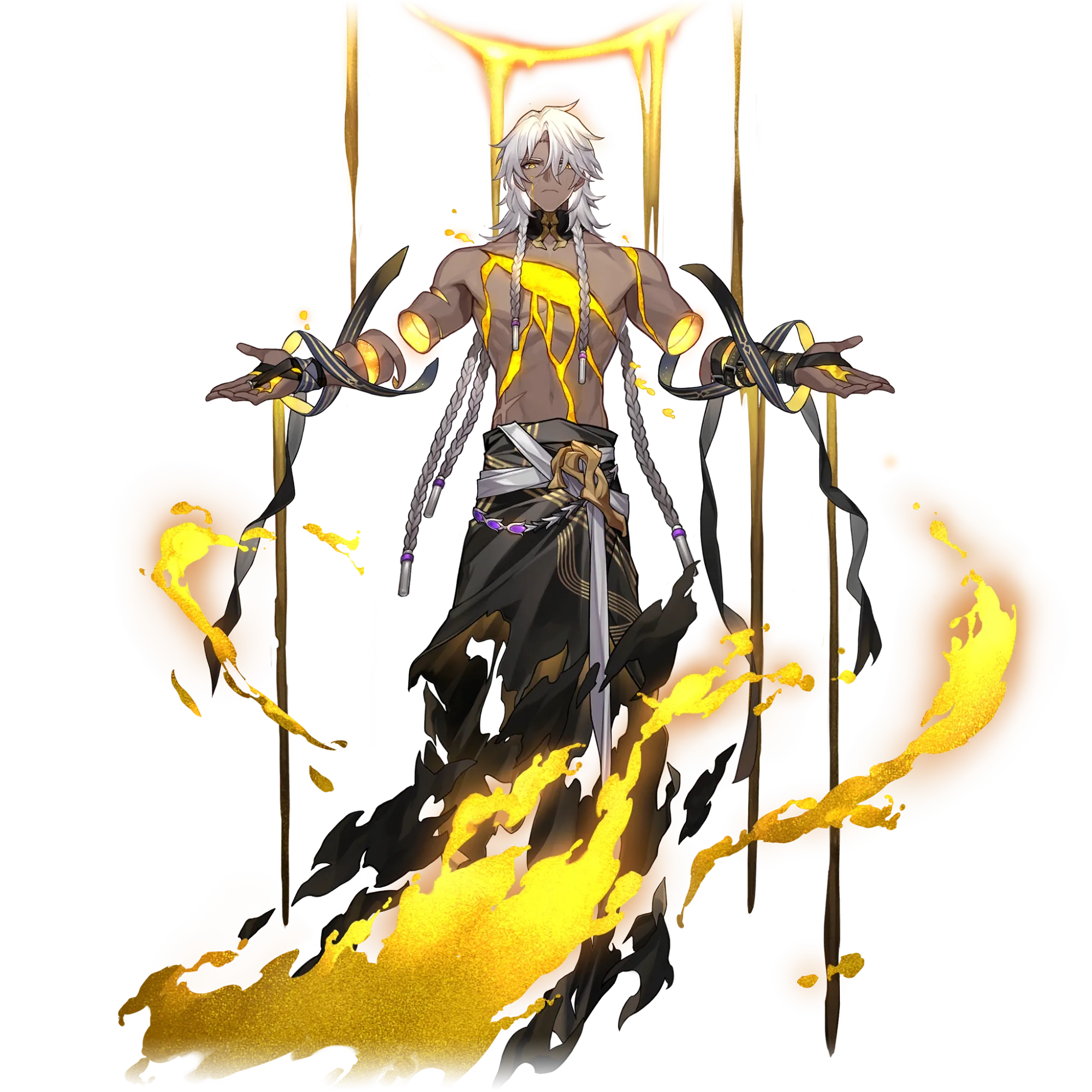
Nanook the Destruction is the first Aeon we learn about, and the first to gaze at the protagonist, who starts out aligned to the Destruction. The first, but not the last. Our protagonist seems to attract the Aeons' attention repeatedly, with no clear cause, as of yet. Whenever it does happen, the consequences are incredibly cool and impactful.
Despite this, THEIR appearance never feels like a Deus-Ex-Machina. It always feels meaningful, earned, and sufficiently high-stakes for a supposed deity to intervene. The more we learn about THEM, the more we realise that THEIR existence is a complicated one.
THEY have followers, but believing in an Aeon doesn't necessarily mean supporting it: Among the followers of some Aeons, there are those who work to prevent THEIR path's ultimate goal. Factions drawing from the same power, but for a different end. There is potential for interesting questions here, like there is in the nature of the Aeons and THEIR paths: Is Destruction truly evil, or a necessity of balancing the cosmos? Does Destruction not also pave the way for new life to blossom?
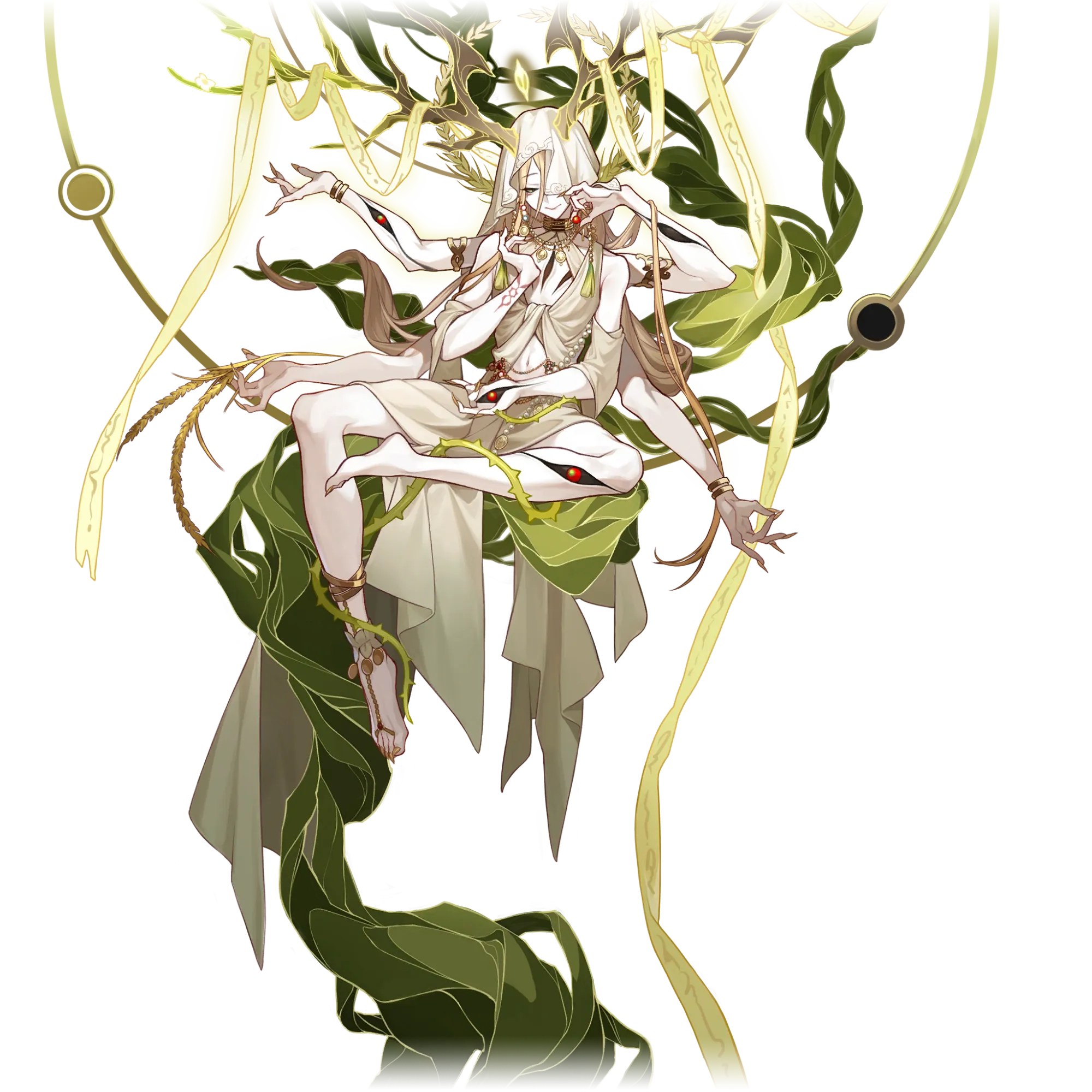
Another example is Yaoshi, the Abundance.
Yaoshi presides over the Path of Abundance.
THEY are associated with healing, but, as THEIR name suggests, there may be too much of a good thing: If life keeps growing without cease, it may twist itself into things unrecognisable. It might lead to immortality, but at what cost?
Pondering these questions, I find it quite telling that Yaoshi's design incorporates black and red eyes and thorny vines.
The Aeons are complicated, unknowable, and deeply tied to the very fabric of how societies in HSR operate - and I find that deeply fascinating.
Sinker.
(Turn-) Based Combat
In contrast to Genshin Impact, Honkai: Star Rail features turn-based combat. I am a fan of turn-based games like the Persona series, and it was the switch to this combat model that kept me playing.
By definition, turn-based combat does not require real-time inputs, and so, my biggest gameplay issue with Genshin Impact was resolved. Even if the input lag I felt in Genshin was still present here, it mattered much less in a turn-based game.
This, I could play on mobile without issue!
There are movement-heavy, optional parts of the game that I avoid while on mobile, but they are far from incompletable.
The combat is relatively simple, but offers enough depth in its interactions and team-building that it feels meaningful and engaging. The stellar animations also help to sell the hype. It's quite addicting (by design, I'd wager), to watch the colourful animations, sound effects and BIG NUMBERS. Just take a look at my current main team, which I lovingly named Big Hat, Big Damage:
The Animations of Sherigan's favourite team.
Indeed, much of the initial challenge is making decent teams with what few characters you have. As you gain more experience and acquire more characters, options for team-building open up. The initial goal towards endgame is to have two distinct teams that don't share any characters. After that, anything more is technically a bonus. That's quite a doable goal by the time you're ready to engage with endgame content.
Building two teams that could reliably clear the endgame was a challenge I relished, and one that's largely become obsolete now. That doesn't mean the fun stops, but as I've matured as a player, I have acquired a deeper understanding of teambuilding, started watching Youtubers like Guoba, and came to understand the meta-aspects of the game better. All of these things contributed to my being a player who no longer feels the need to chase after any character - except the ones I want, of course.
The Only Battle Pass I can't Pass Up
I'm not someone who typically buys battle passes in any game. I usually feel repulsed by Battle Passes for a few reasons:
Many of them are only available for a limited time. This means that, even if you bought the battle pass, you now need to keep playing so the purchase was worth it. Essentially, you're buying the chance to obtain rewards for playing the game. With games that I only play casually, I pretty much never hit that limit. With games I'd like to play more, a battle pass usually leads to pressure that pushes me away, rather than keeps me coming back.
There's a simple reason I do often buy HSR's battle pass:
I can actually complete it without effort.
I realise I'm playing into the company's hands here, but it really is that simple.
I play the game enough that I usually max out the battle pass through regular play. If I do that, then I might as well support the game that I play this much, and get the rewards in the process, right? It's like a loyalty program I choose to opt into after I've gotten my money's worth of content. Of course, this is calculated on Hoyo's part, but it doesn't leave a bad aftertaste to pay a battle pass fee when you're already eligible for all of its rewards.
I must confess, I've recently been rethinking the actual value of the battle pass. As someone who has bought it repeatedly, I feel like I have stockpiled enough of its resources to forego spending for a while. We'll see how long that holds.
Bust? Or Maybe I'll Take It All!

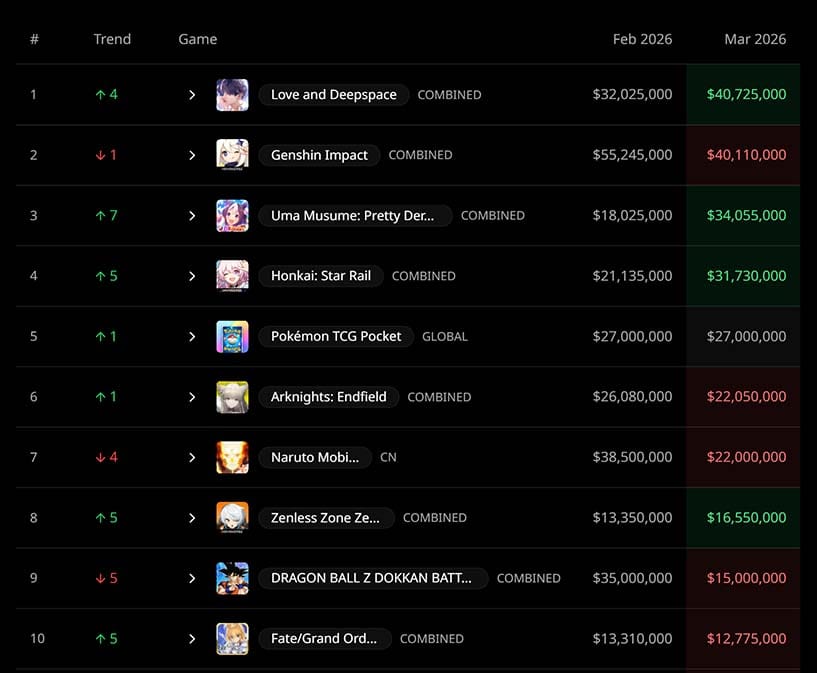
This game is, of course, a gacha. Like all gachas, it's out to getcha - or, your wallet, at least. Honkai: Star Rail has been fairly successful at that. Recent data estimates by SensorTower suggest that the game is still doing quite well, indeed. It made 31.7 Million USD in mobile revenue during March, and I assume the figure is going to be considerably higher for its current anniversary patch.
One thing I can immediately say is this: HSR largely avoids the issue of obfuscating its currencies, making it relatively straightforward to know the value of what you're spending on. Regrettably, there is still a level of obfuscation, but there is really only one currency that matters: Stellar Jades.
If you buy currency with real money, which you can, that converts to Stellar Jades at a 1:1 ratio. Hoyoverse really could have made you buy Stellar Jades directly. This would improve matters slightly, but one real tier of obfuscation is not all that complicated to work with.
The game rewards you with enough Stellar Jades that you can, on average, receive one meaningful upgrade to your account per patch. That might be one of the coveted limited characters associated with that patch, a weapon of theirs, or a previously released limited character.
Personally, I've played the game mostly without spending. Only over the last six months did I become a regular spender. Not (usually) out of FOMO, but because I genuinely felt like what I was getting as a F2P-player was worth some money. With the rewards you receive just for playing, I've never felt like I needed to make a purchase to have an enjoyable game experience. When I missed out on a character I wanted, I'd have to make do until that character came back around. I will admit that I occasionally spend a little bit in a bout of FOMO, if I really want a character, but I've only done so twice, and my spending on that front remains under 100$ total. I hope to keep it that way.
I don't think there's anything wrong with spending on a product you enjoy to help keep it afloat, but the dangers of overspending are ever-present in a game like this, and require insight, honesty, and a great deal of restraint, when systems do actively encourage spending. Not all of it needs to be direct encouragement to spend, either.
Take the character animations I highlighted earlier: You might find yourself simply drawn to the art, animations, and voice of a character so much that you find it hard or even impossible to resist spending. That's very likely by design, and while probably not malicious in intent, it is still predatory.
When comparing HSR to other gachas, I find it is unobtrusive in its promotion in-game: Apart from the rare in-game promotion (like with the current anniversary unit), all the things you could buy are neatly tucked away in the shops-tab, and aren't thrust at you during play, using banners or reminders and the like. That self-assured presentation that doesn't beg for your money at every turn (looking at you, Raid: Shadow Legends), gives me much more goodwill towards the game.
Madam Herta is a Peerless Gem!
Madam Herta is an Unrivalled Genius!

Of course, I can't end this article without mentioning Honkai: Star Rail's characters. The characters are the heart of every gacha:
They're front and centre in the marketing, they're cool, beautiful, enticing, powerful and they're limited, aka desirable.
While some characters are given to you for free, those that really boost your account power and dopamine levels are the characters on limited banners. Their animations are more impressive, they are stronger, and they (usually) carry the most relevance in the story. These are the characters you're meant to grow attached to, and damn, is Hoyo good at doing that. Their artists, writers, and recruited voice actors breathe so much personality into their designs and acts. I find it impressive how diverse the characters are, and still feel like they firmly belong to the same universe. Bravo to the designers and art directors. The marketing team does the rest: the preview trailers, story background videos and other material generate hype ahead of time, so when you finally meet these characters and all the work that went into them finally hits you, well...
It can be very hard to resist the pull (pun very much intended).
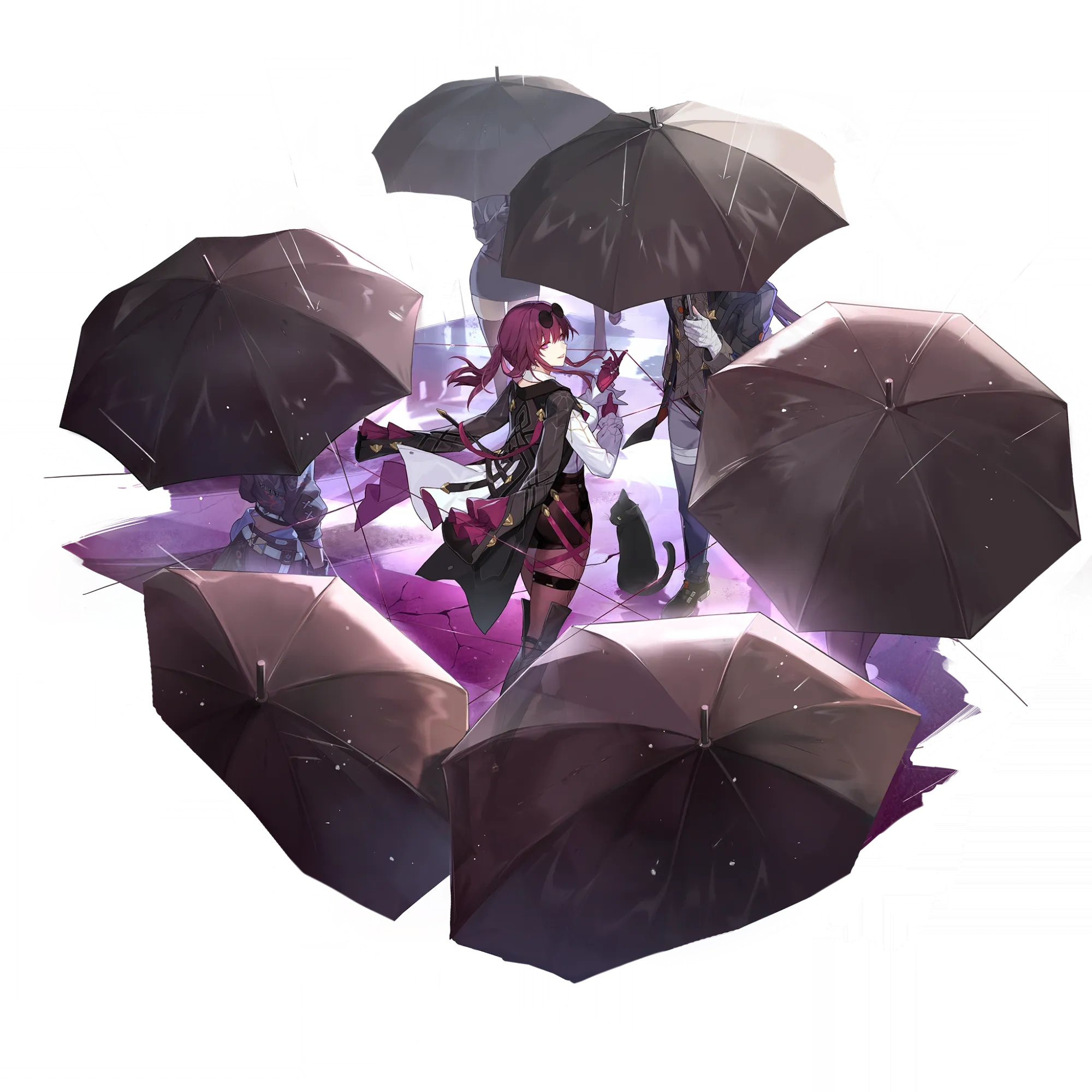
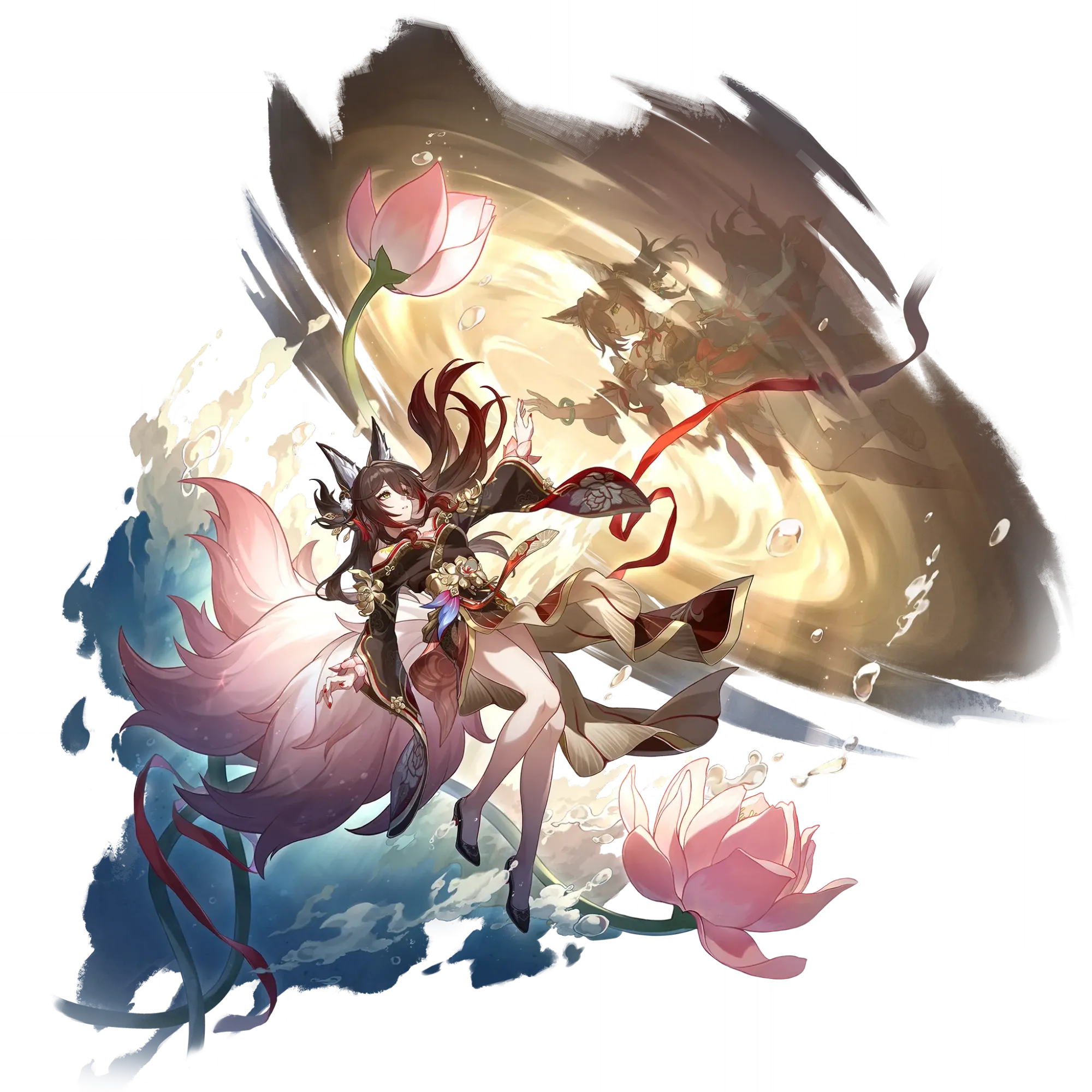
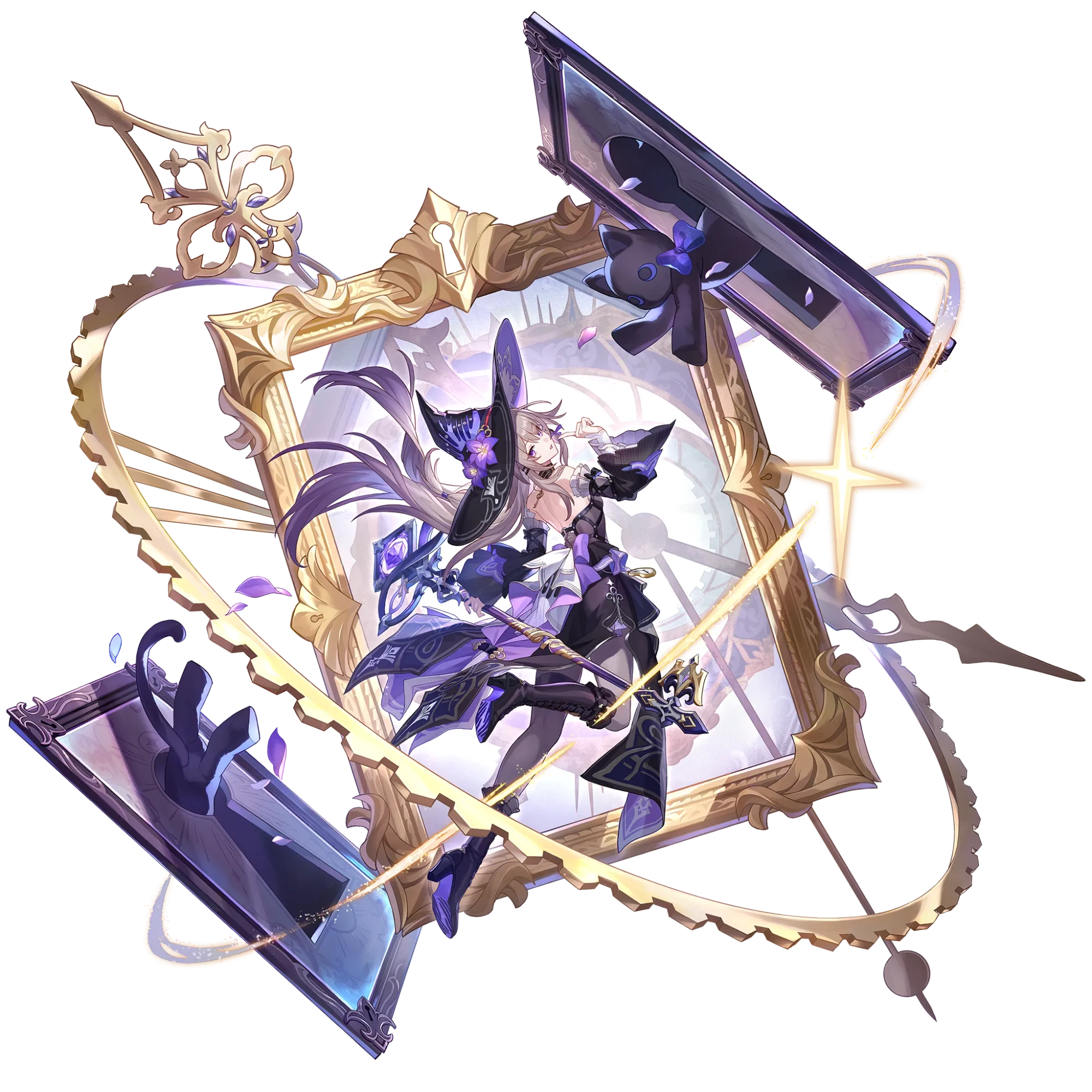
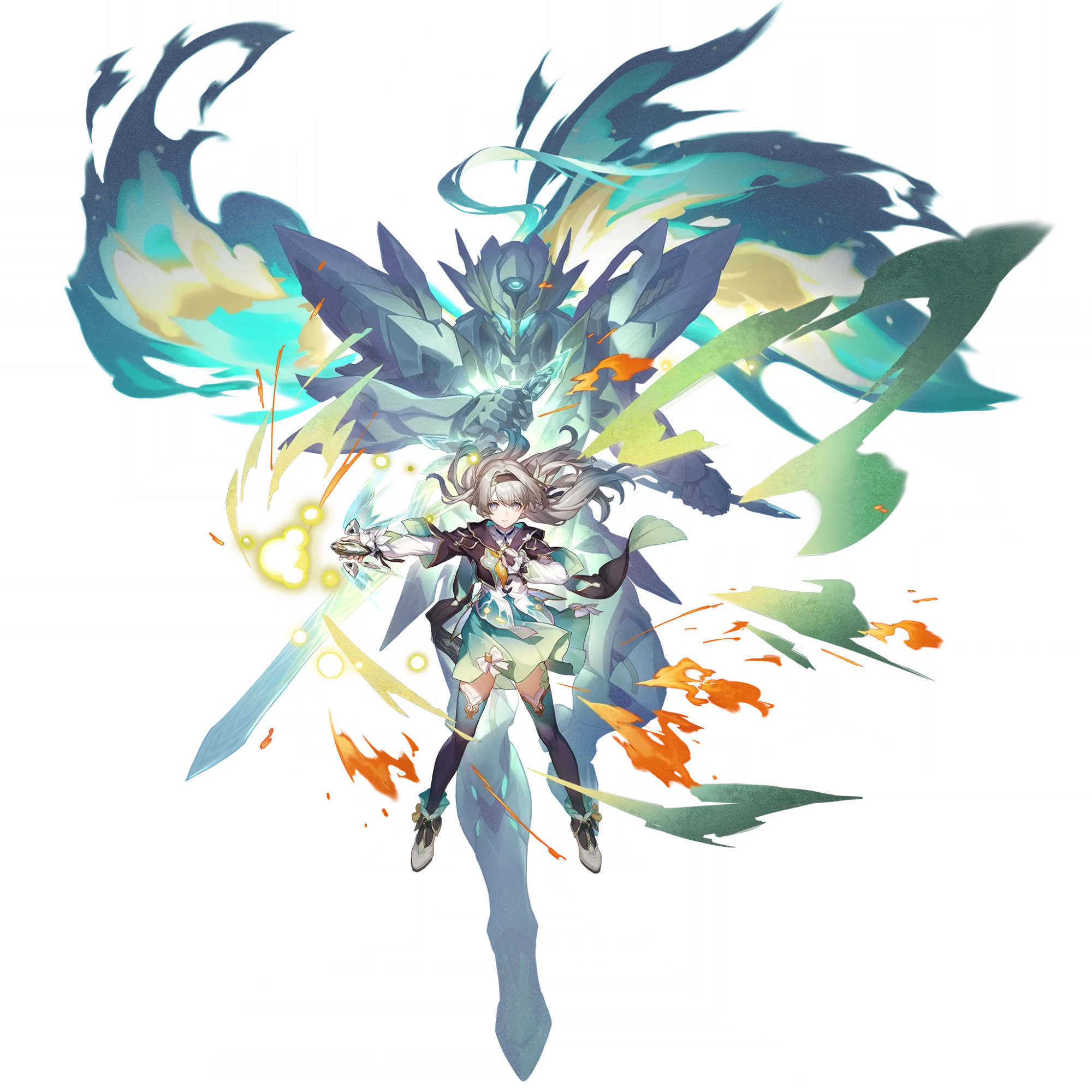
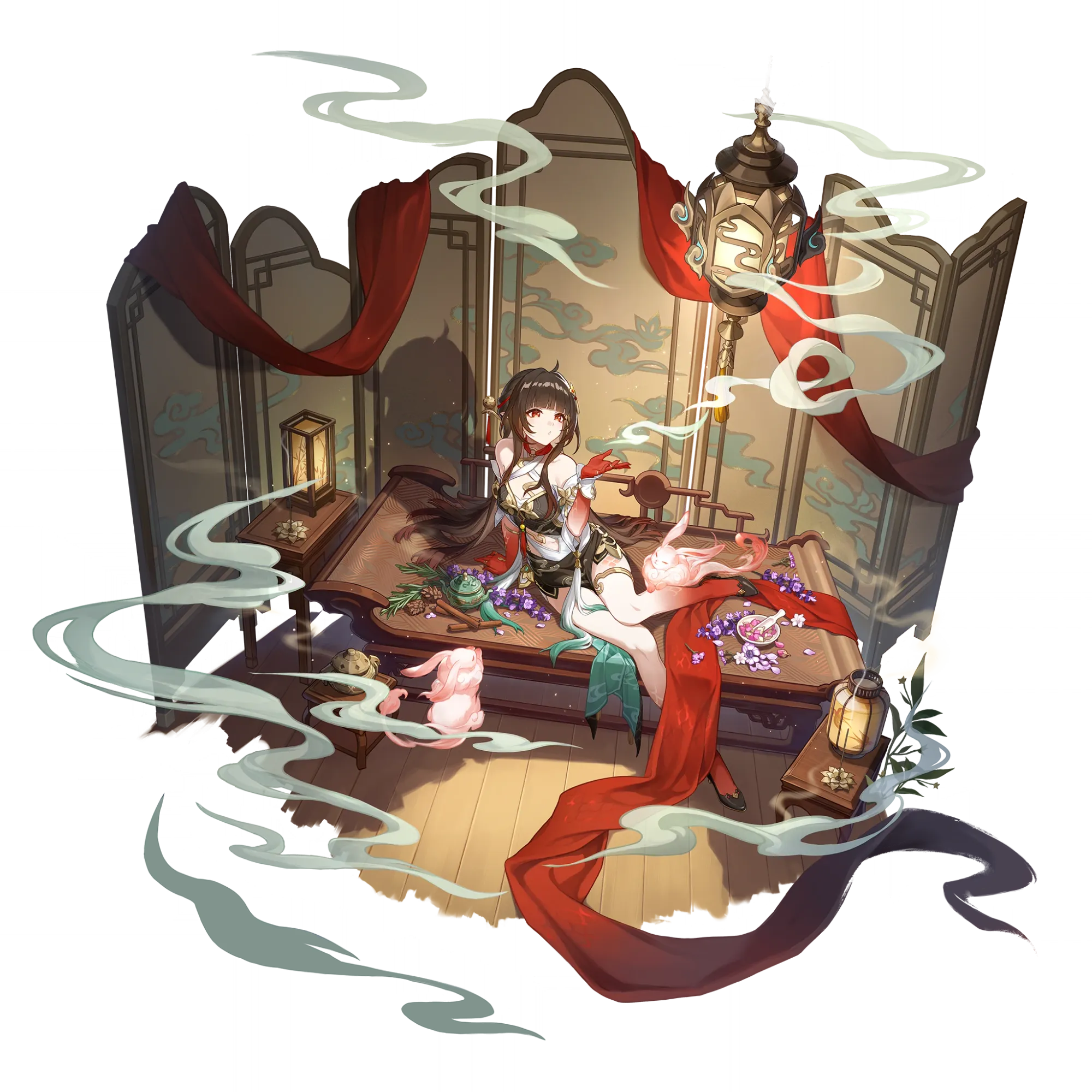
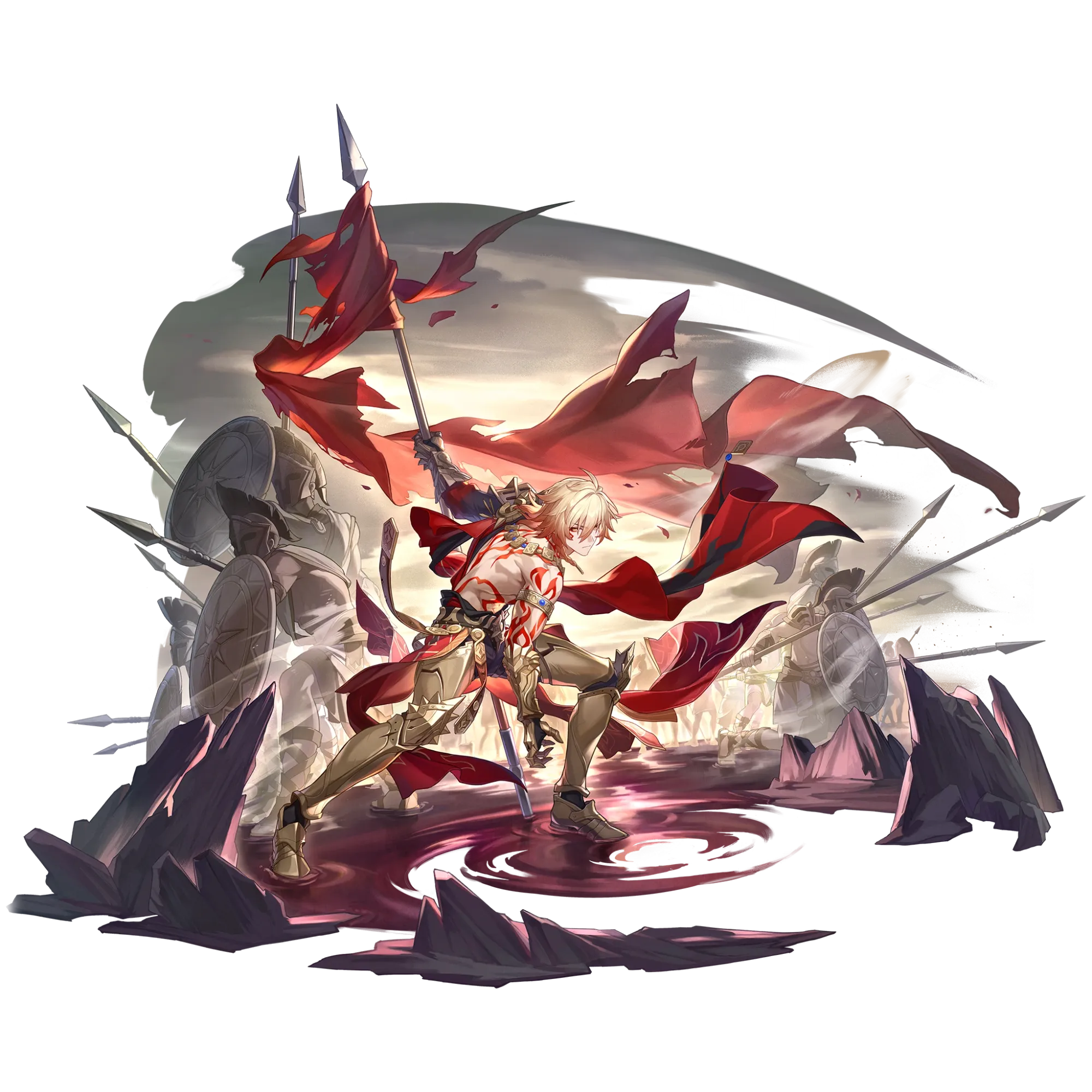
Kafka, Fugue, The Herta, Firefly, Lingsha & Mydei
I've pulled multiple characters, such as Kafka, Fugue, The Herta, Firefly, Lingsha and Mydei, not because I needed them, but because I wanted them. Making you conflate the two is every gacha's job.
The thing is, though: I regret nothing. All of these characters either see regular use, still delight me in story, or are just waiting for a rerun so I can get them off the ground. I'd like one Black Swan and one Cerydra, please. Kafka and Mydei need their teammates.
Even though I know these characters are engineered to be likable, they're likable in a way that feels genuine. Their personalities sparkle as they charm you, annoy you, mystify you, and pull you in, until you start making meme posts about them and– Yes, Firefly, what is it?

I rest my case.
I love Honkai: Star Rail
Despite being a gacha, Honkai: Star Rail shows relative restraint when it comes to enticing player spending. That restraint is still relative to an industry that simply desires the most revenue. Co-opting human psychology to encourage spending is questionable at best, and gacha games would very much like you to forget about all that with their shiny, lovable characters. These problematic aspects inherent to the genre are something I'd very much like to discuss going forward. Despite my criticisms, I still hold a lot of love for Honkai: Star Rail and its community. Love that is equally worth sharing. This game has made me a loyal player due to its fantastic presentation, its great music, its care in worldbuilding, its character design, and fun mobile combat.
Happy 3rd Anniversary, Honkai: Star Rail!
May you all be blessed with E6s on your next 10-Pull and
May this journey lead us starward.